Hey there! I’m a supplier of extrusion lines for film production, and I’m super stoked to share with you how these awesome machines work. So, let’s dive right in! Экструзионные линии для производства пленок
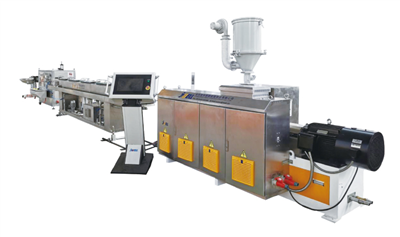
The Basics of an Extrusion Line
First off, an extrusion line for film production is a complex setup that turns raw plastic materials into thin, continuous sheets of film. It’s like a big, high – tech factory on a smaller scale, churning out all kinds of films that we use in our daily lives, from food packaging to agricultural covers.
The whole process starts with the raw materials. We usually use different types of plastics, like polyethylene (PE), polypropylene (PP), or polyvinyl chloride (PVC). These plastics come in the form of small pellets. They’re pretty unassuming at first glance, but once they go through the extrusion line, they transform into something amazing.
The Extruder
The heart of the extrusion line is the extruder. It’s like the engine that powers the whole operation. The extruder has a big hopper at the top where we pour in those plastic pellets. Once the pellets are in the hopper, they start to make their way down into the barrel of the extruder.
Inside the barrel, there’s a screw that rotates. This screw does two main things. First, it moves the plastic pellets forward along the barrel. Second, it melts the plastic. The barrel is heated, and as the pellets are pushed along by the screw, the heat softens them until they turn into a molten, gooey mass.
The temperature control in the extruder is super important. Different plastics have different melting points, so we have to make sure the temperature is just right. If it’s too low, the plastic won’t melt properly, and if it’s too high, the plastic can break down and lose its properties.
The Die
Once the plastic is melted, it’s time to shape it into a film. That’s where the die comes in. The die is a special tool that has a narrow opening in the shape of a long, thin slit. The molten plastic is forced through this slit, and as it comes out, it starts to form a thin, flat sheet.
The die can be adjusted to control the thickness and width of the film. For example, if we want a wider film, we can widen the opening of the die. And if we need a thinner film, we can adjust the die to make the slit narrower.
Cooling and Solidifying
After the plastic comes out of the die as a film, it’s still really hot and soft. So, we need to cool it down and make it solid. There are a few different ways to do this. One common method is to use a set of cooling rolls. The film passes between these rolls, and the rolls absorb the heat from the film, causing it to cool and solidify.
Another way is to use a water bath. The film is dipped into a tank of water, which cools it down quickly. The choice of cooling method depends on the type of plastic and the properties we want the film to have.
Stretching and Orientation
In some cases, we want to stretch the film to improve its properties. Stretching the film can make it stronger, more transparent, and more flexible. There are two main types of stretching: mono – axial stretching and biaxial stretching.
Mono – axial stretching means stretching the film in one direction, either lengthwise or widthwise. Biaxial stretching, on the other hand, involves stretching the film in both the length and width directions. This gives the film better mechanical properties and makes it more suitable for certain applications, like packaging.
The stretching process usually happens after the film has been cooled and solidified. We use special stretching machines that pull the film in the desired direction.
Winding
Once the film has been stretched (if needed) and is in its final form, it’s time to wind it up. The film is wound onto a large roll, which makes it easier to handle and transport. The winding process has to be done carefully to make sure the film is wound evenly and tightly. If the film is wound too loosely, it can wrinkle or get damaged during storage or transportation.
Quality Control
Throughout the whole process, quality control is crucial. We have to make sure that the film meets all the required specifications. This includes checking the thickness, width, strength, and transparency of the film.
We use a variety of testing equipment to do this. For example, we might use a thickness gauge to measure the thickness of the film at different points. We also test the strength of the film by pulling it to see how much force it can withstand before breaking.
Customization and Flexibility
One of the great things about our extrusion lines is that they’re highly customizable. We can adjust the settings of the extruder, die, and other components to produce different types of films with different properties. Whether our customers need a thick, strong film for heavy – duty packaging or a thin, flexible film for food wrapping, we can make it happen.
We also offer different options for automation. Some customers prefer fully automated lines that require minimal human intervention, while others might want a more manual setup. We can tailor the extrusion line to meet the specific needs of each customer.
Why Choose Our Extrusion Lines
If you’re in the market for an extrusion line for film production, there are a few reasons why you should consider our products. First of all, our lines are built with high – quality components. We use the latest technology and materials to ensure that our extrusion lines are reliable and long – lasting.
Second, we offer excellent customer support. Our team of experts is always ready to help you with any questions or problems you might have. Whether it’s installation, maintenance, or troubleshooting, we’ve got your back.

Finally, we’re committed to innovation. We’re constantly researching and developing new features and improvements for our extrusion lines. This means that you’ll always have access to the latest and greatest technology in film production.
Let’s Talk
Plastic Recycling & Pelletizing Line If you’re interested in learning more about our extrusion lines for film production, or if you have any specific requirements, don’t hesitate to get in touch. We’re always happy to have a chat and see how we can help you meet your production needs. Whether you’re a small – scale producer or a large – scale manufacturer, we’ve got the right solution for you.
References
- "Plastics Extrusion Technology Handbook" by Allan A. Griff
- "Extrusion of Polymers: Theory and Practice" by Christopher Rauwendaal
ZHEJIANG JWELL SHEET & FILM EQUIPMENT CO., LTD
Address:
E-mail: salaj@jwell.cn
WebSite: https://www.jwellplastic.com/
