A couple of weeks ago, I got a call from a local carpenter I’ve worked with for three years—let’s call him Mike. He was mid-way through a large custom bookshelf order, he said, and had hit a wall: he’d just spent two days sanding MDF board and was now dealing with a persistent cough, a scratchy throat, and a nagging worry that the fine dust coating his workbench, clothes, and even his coffee mug wasn’t just “wood dust.” “I’ve never had this reaction with solid oak,” he told me, and I could hear the frustration in his voice—his reputation for on-time, high-quality work was on the line. As an MDF board supplier, this question—Is MDF board dust harmful when sanding?—isn’t just a random query; it’s one I field at least a dozen times a week, from carpenters, cabinet makers, weekend DIYers, even parents tackling playroom furniture projects. And it’s a question that deserves more than a one-sentence answer, because the truth is somewhere between the fear-mongering online rants that paint MDF dust as a toxic killer and the dismissive take that it’s “just wood dust.” MDF Board
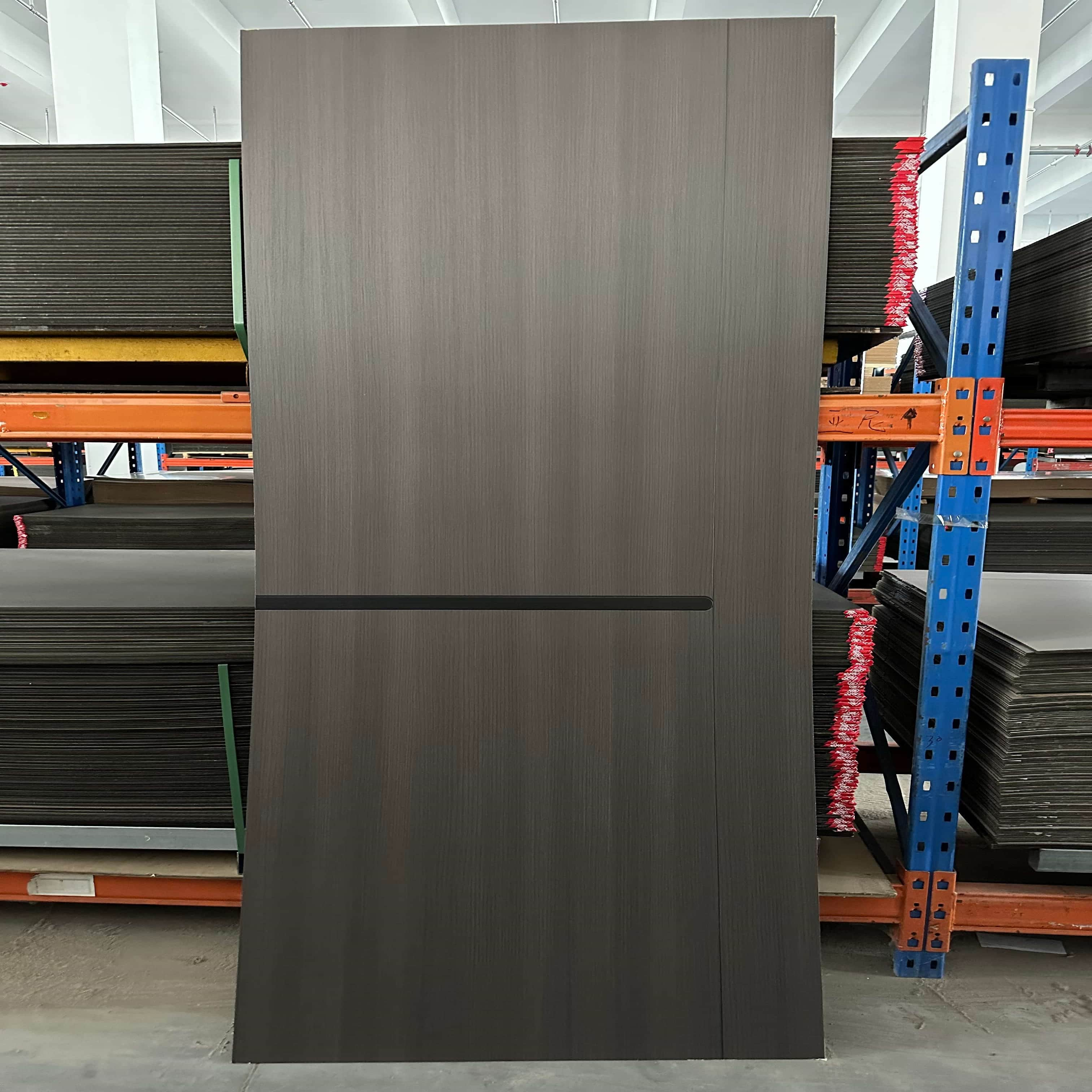
First, let’s cut through the basic definition of MDF, because a lot of the confusion starts there. MDF stands for Medium Density Fiberboard, a manufactured wood panel made by breaking down hardwood or softwood residuals (sawmill scraps, wood chips, even small branches) into tiny fibers, then mixing those fibers with a binder resin and a small amount of paraffin wax to make it water-resistant, then pressing the whole thing together under extreme heat and pressure. Most standard MDF uses urea-formaldehyde resin as the binder—this is the part that people fixate on, and for good reason. When MDF is manufactured, the resin is fully cured (that’s the chemical term for when it hardens so it doesn’t off-gas) before it ever leaves the factory. But when you sand MDF, you’re not just removing wood fibers—you’re grinding up bits of that cured resin, too, and that’s where the dust’s unique properties come in.
Let’s talk about the physical properties of MDF dust, because that’s the first layer of harm. If you’ve ever sanded solid wood, you know that dust is usually made of larger, coarser particles that you can see (or at least feel) in the air, and they tend to settle quickly. MDF dust is the opposite: it’s extremely fine—so fine that it’s classified as a “respirable particulate,” meaning particles are 10 microns or smaller. To put that in perspective, a human hair is about 70 microns thick, so MDF dust particles are seven times smaller than a strand of hair. That means when you sand MDF, this dust doesn’t just float around your workshop—it lingers in the air for minutes, even hours, and it can get deep into your lungs, past your nasal passages and throat, where your body’s natural defenses (like mucus and cilia) can’t catch it. Studies from the Occupational Safety and Health Administration (OSHA) and the National Institute for Occupational Safety and Health (NIOSH) have found that respirable dust from any source can cause respiratory issues over time, but MDF’s size makes it more potent in this regard than most solid wood dust.
Now, the chemical side, which is where the urea-formaldehyde question comes in. Cured urea-formaldehyde resin is stable, right? But when you sand it, you’re breaking it down into micro-particles, and a small subset of those particles can release formaldehyde gas—especially if you’re sanding MDF that’s not fully cured, or if you’re sanding it with a power sander that generates a lot of heat. Wait, I want to clarify that: this is not the same as the “new furniture smell” you get when you first unpack an MDF bookshelf. That’s off-gassing from cured resin, and it’s at much lower levels than what you’d get from sanding. Sanding, however, creates friction and mechanical breakdown that can disrupt the resin matrix, releasing small amounts of formaldehyde directly into the air as part of the dust cloud. For most people, this is an acute irritation at first: burning eyes, runny nose, sore throat, that cough Mike was dealing with. But for people who sand MDF regularly—like the carpenters I supply—long-term exposure is a bigger concern. NIOSH has linked repeated formaldehyde exposure to irritation of the respiratory tract, and the World Health Organization (WHO) classifies formaldehyde as a Group 2A carcinogen, meaning it’s probably carcinogenic to humans. That’s not a death sentence for MDF, but it’s a risk that’s well-documented in occupational safety research.
But here’s the part that a lot of online sources miss: not all MDF dust is the same. The quality of the MDF board you’re using makes a huge difference. I supply several grades of MDF, and I make a point to explain the difference to every customer, because it directly impacts how harmful the dust is when sanding. Economy-grade MDF, for example, often uses lower-quality wood fibers, more urea-formaldehyde resin, and is pressed at lower temperatures to cut costs. That means the resin isn’t as fully cured, and sanding it releases more formaldehyde and coarser, more abrasive dust that can irritate skin and lungs more than higher-grade options. Then there’s premium-grade MDF, which uses longer wood fibers, a more highly cured resin, and often has a smoother, denser surface that produces less dust when sanding. I recently started carrying formaldehyde-free MDF, too, which uses a soy-based resin binder instead of urea-formaldehyde—great for customers who work with MDF regularly and want to minimize chemical exposure. I had a furniture maker tell me last month that switching to formaldehyde-free MDF cut his post-sanding headaches by 90%, and that’s not an isolated comment I’ve heard.
Let’s also address the myths that float around this topic. Some people say MDF dust is “way worse than solid wood dust,” but that’s not entirely accurate either. Solid wood dust from hardwoods like oak or walnut has its own risks—some hardwood dusts are classified as carcinogens (like oak, which is Group 1 carcinogen), and their coarser dust can still cause irritation if you don’t use proper protection. The key difference with MDF is the combination of the ultra-fine respirable particles and the potential for formaldehyde release when sanding, which most solid woods don’t have. Another myth: “if you sand outdoors, you don’t have to worry.” That’s partially true, but wind can carry MDF dust to neighbors, and even outdoors, dust particles can settle on surfaces you’ll touch or breathe in later. I had a customer last year who sanded a dresser on his back patio, and his neighbor’s kid developed a rash from the dust that blew over—so even outdoor sanding has risks if you’re not careful.
As someone who’s been in the MDF board supply business for over 12 years, I’ve seen the good and the bad of MDF. I’ve supplied it to people who build affordable cabinetry for small businesses, to craft shops making custom signs, to DIYers building furniture for their homes, and to large commercial contractors doing office build-outs. The ones who never deal with the issues Mike had? The ones who take precautions, and who use high-quality MDF. The ones who cut corners? The ones who end up with coughs, irritated skin, and frustrated teams.
So what should you do if you regularly sand MDF, whether you’re a professional carpenter or a weekend warrior? Let’s break this down into actionable steps, because knowledge without action doesn’t do anyone any good. First, get the right equipment for sanding. A random orbital sander is better than a belt sander or a hand sander for MDF, because it produces less heat, which means less formaldehyde release from the resin. Pair that with a dust collection system— I recommend 1-micron or smaller filters, because standard shop vac filters don’t catch all the fine MDF dust. For smaller projects, a HEPA-filtered shop vac is a must. Second, wear proper personal protective equipment (PPE), and I don’t mean a flimsy paper dust mask that you buy at a grocery store. A N95 respirator is the minimum, but N99 or N100 respirators are better for MDF, because they catch almost all respirable particles. Goggles are non-negotiable—MDF dust can get in your eyes and cause burning or even scratches, and a face shield is even better if you’re doing heavy sanding. Third, work in a well-ventilated area, but not just by opening a window—use a fan to push dust out of your work space, and seal off adjacent rooms with plastic sheeting if you’re working indoors. Fourth, choose your MDF wisely. As I mentioned earlier, premium or formaldehyde-free MDF produces less harmful dust when sanding, and that small investment up front saves you from the hassle of dealing with dust-related issues later. I always tell customers that the extra $5 or $10 per sheet for higher-grade MDF is nothing compared to the cost of doctor’s bills, missed work, or ruined projects.
Let’s circle back to Mike, the carpenter I mentioned at the start. A few days after that call, he came to my warehouse to pick up new MDF, and we sat down to talk about his project. He’d been using economy-grade MDF for the bookshelf, so we swapped it for premium formaldehyde-free MDF, and I gave him a HEPA-filtered shop vac and a pack of N99 respirators. A week later, he sent me a message saying he’d finished sanding the bookshelf without a single cough or headache, and the customer had already placed an order for two more units. That’s the real win here: MDF is a versatile, affordable material that’s perfect for so many projects, but only if you understand how to work with it safely.
I know there are still people out there who swear MDF dust is toxic enough to avoid entirely, and I get it—when you’re reading stories online about people getting sick, it’s easy to panic. But the science doesn’t back up the extreme takes. OSHA sets a permissible exposure limit (PEL) for wood dust of 15 milligrams per cubic meter of air (for total dust) and 5 mg/m³ for respirable dust. For formaldehyde, the PEL is 0.75 parts per million (ppm) over an 8-hour workday. If you follow proper sanding techniques, use high-quality MDF, and take the right precautions, you’ll stay well below those limits. The risk only comes from ignoring those guidelines, especially if you’re sanding MDF in an enclosed space without protection, or using low-quality MDF that’s high in residual resin.
As an MDF board supplier, my job isn’t just to sell you sheets of panel—its to make sure you have the information you need to work safely and effectively with that MDF. I’ve been doing this long enough to know that when customers are informed, they’re happier, and their projects turn out better. If you’re someone who works with MDF regularly, whether you’re a small carpenter, a DIYer, a furniture maker, or a contractor, I’m here to answer your questions, help you choose the right grade of MDF for your project, and make sure you have the resources to sand it safely. If you’re ready to place an order for MDF, or just have more questions about dust safety or product grades, don’t hesitate to reach out and connect. We’re here to help you get the job done, without the headache of harmful dust.
References
Plywood Occupational Safety and Health Administration. (2023). Wood Dust Hazards and Controls. U.S. Department of Labor.
National Institute for Occupational Safety and Health. (2022). Formaldehyde Exposure in the Workplace: Health Effects and Control Strategies. Centers for Disease Control and Prevention.
World Health Organization. (2019). IARC Monographs on the Evaluation of Carcinogenic Risks to Humans, Volume 128: Formaldehyde, 2-Butoxyethanol, and 1-Phenoxypropan-2-Ol. World Health Organization Press.
American Wood Council. (2021). Working Safely with Medium Density Fiberboard (MDF) in Woodworking Applications. American Forest & Paper Association.
Lisen Wood Industrial Shouguang Co., Ltd.
Lisen Wood Industrial Shouguang Co., Ltd. is one of the most professional mdf board manufacturers and suppliers in China, featured by quality products and low price. Please rest assured to buy discount mdf board from our factory. Welcome to contact us for quotation and free sample.
Address: Nongsheng road, shouguang,shandong province, china
E-mail: liuzhenxi@lisenboard.com
WebSite: https://www.sglswood.com/
