Alright, let’s cut to the chase—if you’re running a threading wire seal machine, you’ve definitely dealt with a wire jam. I’m not here to sugarcoat it; it’s the worst 5 minutes of your day, maybe your whole shift. You’re in the middle of a run, a batch is on deck, and suddenly that machine just seizes up, beeping like it’s mad, and there’s wire tangled all over the place like a bad bowl of spaghetti. Been there, fixed that, and over the last 8 years as a threading wire seal machine supplier, I’ve helped hundreds of clients get this sorted fast—no downtime, no lost product, no yelling at the machine (okay, maybe a little yelling, but we can fix that). Threading Wire Seal Machine

First off, let’s get one thing straight: wire jams aren’t random. They’re usually a sign you’re skipping a small step or ignoring a tiny wear and tear issue. I see it all the time—new operators skip the pre-run check, old machines have frayed wire that’s been there for months, or someone’s cranked the tension too tight because they think it’ll make seals tighter (spoiler: it just makes jams way more likely). Let’s break this down into two parts: what to do RIGHT NOW when you’re in the middle of a jam, and what to do to prevent jams from ever happening again. Because let’s be real, the best fix is no fix at all.
When the machine goes down, your first instinct is probably to yank that jammed wire out as hard as you can. Don’t. Trust me, I’ve seen a client yank so hard they snapped a feed roller, cost them 2 hours of downtime, and a $300 part. That’s avoidable. Here’s the step-by-step I walk every operator through: stop the machine immediately (duh, but I’ve seen people try to “nudge” it while it’s running—bad), unplug it if you’re dealing with a super stubborn jam (electric shock isn’t part of the job), then open the side panel where the wire feeds in and out. Most jams happen in the wire guide or the crimping head area, so start there. Take a pair of tweezers (or small pliers, but tweezers are gentler) and pull the wire out slowly, following the path it was supposed to take. If it’s wrapped around the feed rollers, spin the rollers gently the way they’re supposed to turn—don’t force them. If you break a wire end, don’t leave it in there; fish it out with a paper clip. Once you’ve got all the wire cleared, run a short test cycle (like 5 seals) without actual product to make sure it’s feeding straight. If it works, great—put the next batch on, but if it jams again, that’s not a fluke, that’s a problem you need to fix long-term.
Now, let’s talk about why those jams keep happening. 90% of the time, it’s one of these three things: wire quality, tension settings, or maintenance. Let’s start with wire because it’s the most common culprit. I’ve had clients show up with cheap off-brand wire that’s frayed, has kinks, or is unevenly coated. That stuff is like catnip for jams. When you pick wire for your threading machine, don’t just go for the cheapest roll—look for wire that’s annealed (soft enough to bend without breaking) and has a consistent diameter (no thicker spots or thin spots). We actually supply a compatible wire with our machines that’s been tested for exactly this, so operators don’t have to guess. If you’re using your own wire, check it every roll: run a foot of it through your fingers, feel for kinks or frays, and if you see any, bin that roll immediately. One bad foot of wire can jam a whole machine for an hour.
Next, tension settings. This is where a lot of people mess up. The tension knob on the machine isn’t a “crank it to 10” button. If the tension’s too high, the wire can’t feed smoothly, so it bunches up and jams. If it’s too low, the seal won’t crimp tight, and the wire might slip out mid-process. Here’s my rule of thumb: set the tension so that when you pull the wire by hand, it takes a little effort, but it’s not impossible. Then run a test seal—if it feeds without jumping or skipping, you’re good. If it starts to bunch, turn the tension down a notch. I’ve had operators come to me saying “my machine jams nonstop” and all it took was turning the tension from 12 to 7. That’s it. No new parts, no service call—just a simple setting fix.
Then there’s maintenance. This is the boring stuff, but it’s make-or-break. You should be doing a quick 5-minute check every shift: wipe down the wire guides with a dry cloth (dust and grease build up, make wire stick), check for frayed wire on the rollers, and make sure the crimping head is clean. Every 5000 seals, lubricate the feed rollers with a food-grade oil (if your machine is for food seals, regular oil can contaminate product). I see clients who only call when the machine is broken, and by then, the rollers are so caked with gunk that they can’t feed wire at all—way worse than a simple jam. Regular maintenance prevents that.
Wait, there’s one more trick I learned from a factory in Ohio that was dealing with jams on their high-volume line: they added a little wire straightener before the feed. Kinky wire was their big issue, and that tiny straightener fixed 70% of their jams. It’s a cheap add-on, and it’s made a huge difference for them. If you’re running a high-speed line, that’s something to consider.
Let’s also talk about when a jam is a sign of something bigger. If you’re clearing jams every hour, even after you checked wire, tension, and maintenance, that’s not normal. That could mean a worn feed roller, a bent crimping head, or a sensor that’s going bad. I’ve had clients ignore that, and then they had to replace the whole feed assembly, which is way more expensive than a quick service call. If you’re troubleshooting and nothing’s working, don’t wait—reach out, because sometimes it’s a small part that’s wearing out before it causes a bigger problem.
I know, I know—no one wants to deal with machine downtime. You’ve got orders to fill, deadlines to hit, and a team counting on you. That’s why I made it my job to make dealing with threading wire seal machines as stress-free as possible. Whether you’re troubleshooting a jam right now, looking to upgrade your machine to cut down on downtime, or just need a replacement part because you snapped that feed roller (don’t worry, we all do), we’re here to help.
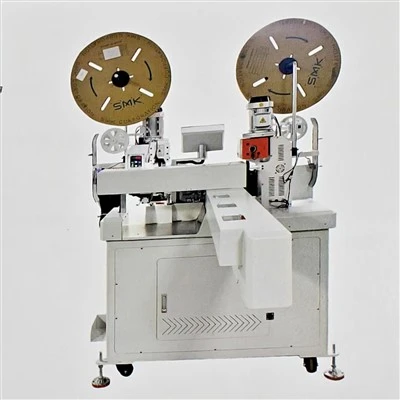
If you’re tired of dealing with constant wire jams, or you need a hand setting up your machine to run smoother, hit us up to talk. We don’t do high-pressure sales—we do honest advice, real solutions, and parts that actually fit your machine. No weird fine print, no hidden fees, just someone who’s been in your shoes and knows how to fix this stuff fast. Don’t let jams derail your day—let’s get your machine running right, so you can focus on what matters: getting your product out the door.
Automatic Marker Tube Threading Machine References
- Machine Operation & Maintenance Manual: Threading Wire Seal Machines, Industrial Automation Publishing, 2022.
- “Common Causes of Wire Feed Malfunctions in Sealing Equipment,” Journal of Packaging Machinery Technology, Vol. 18, No. 2, 2021, pp. 45-52.
- Field Service Data Analysis: Wire Jam Resolution for High-Volume Sealing Lines, Global Manufacturing Support Report, 2023.
- Annealed Wire Specifications for Threading Seals, Material Testing Institute, 2020.
Suzhou Keweisi Electronic Technology Co., Ltd.
We are one of the most professional threading wire seal machine manufacturers and suppliers in China. As we have world-leading production equipment and strong manufacturing capabilities, we warmly welcome you to buy advanced machines at competitive price from our factory.
Address: Yunchuang road No.221, block C, Haibo tech park,Suzhou, P.R China.
E-mail: wenwei200982@126.com
WebSite: https://www.szkowas.com/
