Hey there! I’m a supplier in the automotive industry production equipment game. Over the years, I’ve seen a whole bunch of equipment come and go, and I’ve got a pretty good idea of what makes high – quality automotive production equipment stand out. So, let’s dive right in and talk about the key features that you should look for. Automotive Industry Production Equipment
Precision and Accuracy
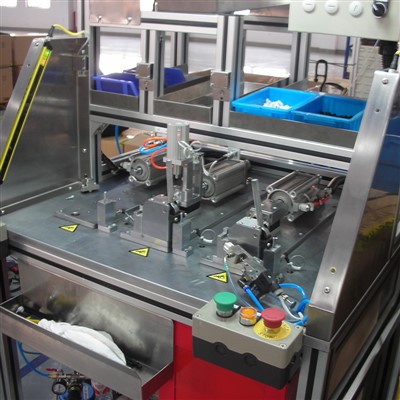
First off, precision and accuracy are like the bread and butter of high – quality automotive production equipment. In the automotive world, every single part needs to fit together perfectly. A tiny error in measurement can lead to big problems down the line, like parts that don’t assemble correctly or vehicles that don’t perform as well as they should.
For example, when we’re talking about machining centers, they need to be able to cut and shape metal parts with extremely tight tolerances. We’re talking about tolerances in the range of micrometers. That’s insanely precise! If the equipment can’t hold these tight tolerances consistently, you’re going to end up with a lot of scrap parts and a whole lot of wasted time and money.
The same goes for assembly equipment. Robotic arms, for instance, need to pick up parts and place them in the exact right position every single time. They’ve got to have high – resolution sensors and advanced control systems to ensure that they’re accurate to within a fraction of a millimeter. This kind of precision is what allows automakers to build cars that are reliable and perform well.
Durability and Reliability
Another super important feature is durability and reliability. Automotive production is a 24/7 operation in many cases. The equipment has to be able to run for long hours, day in and day out, without breaking down.
Let’s take stamping presses as an example. These machines are used to shape metal sheets into car body parts. They have to withstand a huge amount of force and stress every time they make a stamp. A high – quality stamping press is built with heavy – duty materials and a robust design. It’s got to have a strong frame, high – quality bearings, and a reliable hydraulic or mechanical system.
If the equipment breaks down, it can bring the entire production line to a halt. And that’s a big deal. Every minute of downtime costs the automaker a lot of money. So, when we’re supplying equipment, we make sure that it’s built to last. We use high – grade steel, advanced coatings, and top – of – the – line components to ensure that the equipment can handle the rigors of automotive production.
Flexibility and Adaptability
The automotive industry is constantly evolving. New car models are being introduced all the time, and production requirements can change quickly. That’s why high – quality automotive production equipment needs to be flexible and adaptable.
Take a look at automated assembly lines. These lines need to be able to handle different types of parts and assemble them in different configurations. A good assembly line should be able to be reconfigured relatively easily to accommodate new models or changes in production volume.
For example, some of our equipment comes with modular designs. This means that different sections of the equipment can be added, removed, or rearranged as needed. It’s like building with Lego blocks. You can customize the equipment to fit your specific production needs.
Also, modern equipment often has programmable controls. This allows operators to change the settings and parameters of the equipment quickly and easily. Whether it’s adjusting the speed of a conveyor belt or changing the welding pattern of a robotic welder, the equipment needs to be able to adapt to different requirements on the fly.
Efficiency and Productivity
Efficiency and productivity are top priorities in the automotive industry. High – quality production equipment should be designed to maximize output while minimizing waste and energy consumption.
Let’s talk about energy – efficient motors. In many automotive production processes, motors are used to power everything from conveyor belts to machining tools. Using energy – efficient motors can significantly reduce the energy consumption of the equipment. This not only saves money on electricity bills but also makes the production process more environmentally friendly.
In addition, equipment should be designed to minimize cycle times. For example, in a painting booth, the equipment should be able to apply paint quickly and evenly. This reduces the amount of time that a car body spends in the painting process, which in turn increases the overall productivity of the production line.
Another aspect of efficiency is the ability to handle multiple tasks simultaneously. Some of our advanced robotic systems can perform multiple operations at the same time, such as welding, riveting, and screwing. This kind of multi – tasking capability can really boost productivity and reduce the number of machines needed on the production line.
Safety Features
Safety is non – negotiable in the automotive production environment. High – quality equipment should come with a whole bunch of safety features to protect the operators and prevent accidents.
For example, many machines are equipped with safety guards. These guards prevent operators from getting too close to moving parts, such as belts, gears, and cutting tools. They’re usually made of strong materials like steel or polycarbonate and are designed to be sturdy enough to withstand impacts.
In addition, modern equipment often has sensors that can detect when an operator is getting too close to a dangerous area. When the sensors detect a potential safety hazard, they can automatically stop the machine or activate an alarm.
Some equipment also has emergency stop buttons that are easily accessible. In case of an emergency, operators can quickly press these buttons to stop the machine immediately.
Ease of Maintenance
Maintenance is a fact of life in the automotive production world. High – quality equipment should be easy to maintain to keep it running smoothly.
First of all, the equipment should be designed with easy access to key components. For example, if a machine has a hydraulic system, the hydraulic filters and pumps should be located in a place where they’re easy to reach. This makes it easier for maintenance technicians to perform routine maintenance tasks, such as changing filters or checking fluid levels.
In addition, the equipment should have diagnostic systems that can quickly identify problems. These diagnostic systems can provide detailed information about the status of the equipment, such as the condition of motors, sensors, and other components. This allows maintenance technicians to troubleshoot problems more efficiently and make repairs more quickly.
Some of our equipment also comes with remote monitoring capabilities. This means that we can monitor the performance of the equipment from a distance and provide support to the customer if needed. It’s a great way to ensure that the equipment is always in top – notch condition.
Integration Capabilities
In today’s automotive production plants, different types of equipment need to work together seamlessly. High – quality production equipment should have good integration capabilities.
For example, a robotic welding system should be able to communicate with a conveyor system. The conveyor system needs to know when to move the car body into the welding area, and the welding system needs to know when the car body is in the correct position. This kind of communication is essential for a smooth production process.
Our equipment is designed with open – standard interfaces, which makes it easier to integrate with other systems. Whether it’s connecting to a factory’s management information system or integrating with other production machines, our equipment can play well with others.
Cost – effectiveness
Last but not least, cost – effectiveness is a major consideration. High – quality automotive production equipment doesn’t have to break the bank.
When we’re developing our equipment, we focus on providing the best value for our customers. We use cost – effective materials and manufacturing processes without sacrificing quality. For example, we might use advanced engineering techniques to optimize the design of the equipment, reducing the amount of material needed without compromising its performance.
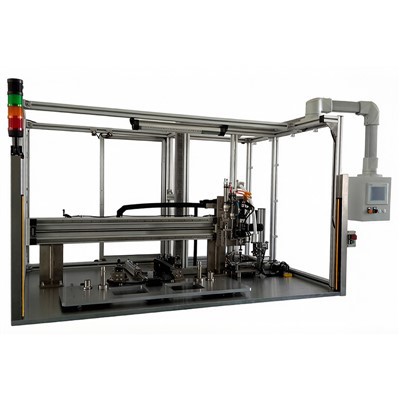
In addition, our equipment is designed to have a long service life. This means that the initial investment pays off over time, as the equipment doesn’t need to be replaced as often. And when you factor in the savings from increased productivity, reduced energy consumption, and lower maintenance costs, the equipment can actually end up being very cost – effective in the long run.
Packaging Industry Production Equipment So, there you have it! These are the key features of high – quality automotive production equipment. If you’re in the market for automotive production equipment, keep these features in mind. And if you’ve got any questions or want to talk about your specific needs, don’t hesitate to reach out. We’re here to help you find the best equipment for your automotive production line.
References
- "Automotive Manufacturing Technology" by John A. Schey
- "Modern Manufacturing Processes" edited by David A. Stephenson and John A. Agapiou
- Industry reports from leading automotive research firms
Shanghai Zenyan Automation Engineering Co., Ltd.
As one of the leading automotive industry production equipment manufacturers in China, we warmly welcome you to buy advanced automotive industry production equipment made in China here from our factory. All customized machines are with high quality and low price. Contact us for quotation.
Address: 3rd Floor, Building A, No.5629 Beisong Road, Chedun Town, Songjiang District, Shanghai, China
E-mail: zenyan_sh@163.com
WebSite: https://www.zenyanauto.com/
