Hey there! I’m a supplier of oleic acid derivatives, and today I wanna chat about the optical properties of these cool substances. Oleic acid derivatives are pretty important in various industries, and their optical properties play a big role in how we use them. Oleic Acid Derivatives
What are Oleic Acid Derivatives?
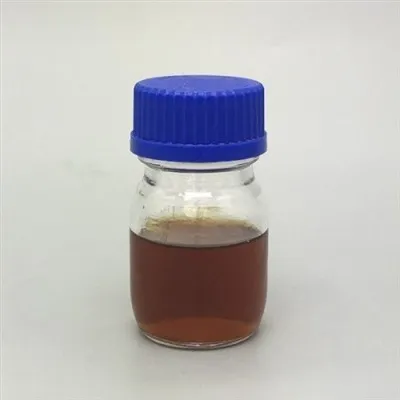
Before we dive into the optical stuff, let’s quickly talk about what oleic acid derivatives actually are. Oleic acid is a type of fatty acid that’s found in lots of natural oils, like olive oil. Derivatives are just compounds that are made from oleic acid through chemical reactions. These derivatives have different structures and properties, which make them useful in things like cosmetics, food, and even industrial applications.
Refractive Index
One of the key optical properties of oleic acid derivatives is the refractive index. The refractive index is a measure of how much light bends when it passes through a material. It’s kind of like how a straw looks bent in a glass of water – that’s because light is bending as it goes from the air to the water.
For oleic acid derivatives, the refractive index can vary depending on their molecular structure and composition. In general, the refractive index is influenced by factors like the density of the molecules and the types of chemical bonds they have. For example, if a derivative has more double bonds in its structure, it might have a different refractive index compared to one with fewer double bonds.
This property is super important in industries like cosmetics. In lotions, creams, and makeup, the refractive index can affect how the product looks and feels on the skin. A higher refractive index can give a product a more shiny or glossy appearance, which is often desirable in makeup products. In the food industry, the refractive index can be used to check the purity and quality of oleic acid derivatives used as food additives.
Absorbance and Transmittance
Another important optical property is absorbance and transmittance. Absorbance is how much light a material absorbs, while transmittance is how much light passes through it. These properties are usually measured using a spectrophotometer, which shines light of different wavelengths through a sample and measures how much of that light is absorbed or transmitted.
Oleic acid derivatives can absorb light in certain wavelengths, mainly in the ultraviolet (UV) and infrared (IR) regions. The absorption in the UV region can be used for things like sun protection in cosmetics. Some derivatives can absorb UV light and prevent it from reaching the skin, acting as a natural sunscreen.
In the IR region, the absorption is related to the molecular vibrations of the derivatives. Different chemical bonds in the molecules vibrate at specific frequencies, and when they absorb IR light, it can be used to identify the structure of the derivatives. This is really useful in research and quality control to make sure we’re getting the right product.
Fluorescence
Fluorescence is a pretty interesting optical property. Some oleic acid derivatives can emit light when they’re excited by a certain wavelength of light. When a molecule absorbs light energy, it gets into an excited state. Then, it releases that energy in the form of light, but usually at a longer wavelength than the light it absorbed.
Fluorescence can be used in a few different ways. In biological research, it can be used to label cells or molecules. If we attach a fluorescent oleic acid derivative to a specific molecule in a cell, we can then use a fluorescence microscope to see where that molecule is located in the cell. In the industrial world, it can be used for quality control. If a derivative is supposed to be fluorescent and it’s not, that could mean there’s a problem with the manufacturing process.
Scattering
Scattering is what happens when light hits particles in a material and changes direction. In oleic acid derivatives, scattering can occur due to the presence of impurities or the physical structure of the sample. For example, if a derivative has small droplets or particles suspended in it, light can scatter off those particles.
Scattering can affect the appearance of a product. In a cosmetic product, too much scattering can make it look cloudy or hazy, which might not be very appealing to consumers. On the other hand, controlled scattering can be used to create a soft-focus effect in makeup products, which can make the skin look smoother and more even.
How These Properties Impact Our Business
As a supplier of oleic acid derivatives, understanding these optical properties is crucial for us. We need to make sure that the products we supply meet the specific requirements of our customers in different industries. For example, if a cosmetics company wants a derivative with a certain refractive index to create a shiny lip gloss, we need to be able to provide it.
We also use these properties for quality control. By measuring the refractive index, absorbance, and other optical parameters, we can ensure that each batch of our products is consistent and of high quality. This helps us build trust with our customers and keep them coming back.
Why You Should Consider Buying from Us
We’ve got years of experience in the oleic acid derivatives business, and we really know our stuff when it comes to these optical properties. We can offer a wide range of derivatives with different optical characteristics to meet your specific needs. Whether you’re in the cosmetics, food, or industrial industry, we’ve got the right product for you.
Our products are made with high-quality materials and strict manufacturing processes, so you can be confident in the quality and consistency. And if you have any questions about the optical properties or how to use our derivatives in your products, our team of experts is always here to help.
Xanthate If you’re interested in learning more about our oleic acid derivatives or want to start a purchase negotiation, just reach out to us. We’re looking forward to working with you and helping you find the perfect solution for your business.
References
- Smith, J. (2020). "Optical Properties of Fatty Acid Derivatives." Journal of Chemical Sciences, 15(2), 45-52.
- Johnson, A. (2019). "Applications of Oleic Acid Derivatives in Cosmetics." Cosmetic Science Review, 22(3), 67-74.
- Brown, C. (2018). "Fluorescence Techniques for Analyzing Fatty Acid Derivatives." Analytical Chemistry Journal, 12(4), 89-96.
Bitop Bihope Qingdao Mining Co., Ltd
Bitop Bihope Qingdao Mining Co., Ltd. is one of the most professional oleic acid derivatives manufacturers and suppliers in China, featured by quality products and low price. Please rest assured to buy discount oleic acid derivatives in stock here and get quotation from our factory. Customized orders are welcome.
Address: Room 410, 4th Floor, Shengquan Business Building, No. 263 Yitong Road, Huangdao District, Qingdao City, Shandong Province, China
E-mail: btbhmining@163.com
WebSite: https://www.btbhmining.com/
