In the realm of snack food production, the efficient use of raw materials stands as a cornerstone for both economic viability and environmental sustainability. As a supplier of snack food production lines, I’ve witnessed firsthand how a well – optimized production line can transform the way raw materials are utilized. This blog post delves into the various strategies and technologies that enable a snack food production line to achieve peak efficiency in raw material usage. Snack Food Production Line

Precise Inventory Management
One of the first steps in optimizing raw material use is implementing a precise inventory management system. This system allows snack food manufacturers to keep track of the quantity, quality, and expiration dates of all raw materials. By having a clear understanding of what is in stock, manufacturers can avoid overstocking, which can lead to waste due to expiration, and understocking, which can disrupt production.
Advanced inventory management software can be integrated with the production line. This software can analyze historical production data to predict future raw material requirements accurately. For example, if a particular snack has a higher demand during certain seasons, the system can alert the procurement team to order the appropriate amount of raw materials in advance. Additionally, real – time monitoring of inventory levels can trigger automatic reordering when stocks reach a predefined minimum level.
Cutting – Edge Ingredient Mixing Technology
The mixing process is crucial in snack food production as it determines the quality and consistency of the final product. Modern snack food production lines are equipped with state – of the – art mixing technologies that ensure precise ingredient ratios. These mixers are designed to handle a wide range of raw materials, from dry powders to viscous liquids.
For instance, some high – end mixers use advanced sensors to measure the exact amount of each ingredient being added to the mix. This not only ensures that the product meets the desired taste and texture standards but also minimizes waste. If the mixer is set to a specific ratio of flour to sugar, for example, it will accurately dispense the appropriate amounts, reducing the likelihood of over – or under – using these key ingredients.
Moreover, continuous mixing systems are becoming increasingly popular in snack food production. Unlike batch mixers, which require a specific amount of raw materials to be mixed at once, continuous mixers can handle a continuous flow of ingredients. This allows for more efficient use of raw materials, as there is less downtime between batches and more consistent production.
Usage of Advanced Molding and Cutting Equipment
In snack food production, the molding and cutting processes can significantly impact raw material utilization. Traditional molding and cutting methods often result in a significant amount of waste. However, modern production lines are equipped with advanced equipment that can minimize this waste.
For example, precision cutting machines use laser or water – jet technology to cut snacks with high accuracy. These machines can follow complex shapes and patterns, reducing the amount of leftover material. In addition, some molding machines are designed to reuse the excess material generated during the molding process. This excess material can be recycled back into the production stream, either by being remixed with the raw materials or used in the production of other snack products.
Enhancing Production Yield through Process Control
Process control is another key factor in optimizing raw material use. By closely monitoring and controlling various aspects of the production process, such as temperature, pressure, and cooking time, manufacturers can improve the yield of their snack products.
For example, in the frying process, maintaining the correct oil temperature is crucial. If the oil is too hot, the snacks may burn, resulting in a lower yield and wasted raw materials. Conversely, if the oil is too cold, the snacks may not cook properly, leading to a sub – standard product. Advanced fryers are equipped with temperature sensors and automatic control systems that can maintain the ideal frying temperature throughout the process.
Similarly, in the baking process, precise control of oven temperature and humidity can ensure that the snacks are baked evenly and thoroughly. This not only improves the quality of the final product but also reduces the number of defective items, which would otherwise be discarded as waste.
Waste Reduction and Recycling Initiatives
In addition to optimizing the production process, snack food manufacturers can also implement waste reduction and recycling initiatives to make the most of their raw materials. For example, the by – products generated during the production process, such as bran from wheat processing or skins from fruit and vegetable snacks, can be repurposed.
Bran can be used as an ingredient in other food products, such as high – fiber cereals or animal feed. Fruit and vegetable skins can be dehydrated and ground into powder, which can then be used as a natural flavoring or coloring agent in snack products. By finding new uses for these by – products, manufacturers can reduce waste and increase the overall utilization of their raw materials.
Recycling also plays a crucial role in waste reduction. Packaging materials, such as plastic bags and cardboard boxes, can be recycled. Moreover, some snack food production lines are designed to recycle materials within the production process itself. For example, the oil used in the frying process can be filtered and reused multiple times, reducing the need for fresh oil and minimizing waste.
Staff Training and Quality Control
Finally, well – trained staff and a robust quality control system are essential for optimizing raw material use. Staff members should be educated on the importance of efficient raw material utilization and trained on how to operate the production equipment properly.
Quality control measures should be in place at every stage of the production process. This includes inspecting raw materials upon arrival to ensure their quality, monitoring the production process to detect any issues early, and conducting final product inspections to ensure that only high – quality products leave the factory. By preventing defective products from being produced, manufacturers can save on raw materials and reduce waste.
In conclusion, optimizing the use of raw materials in a snack food production line is a multifaceted process. It involves precise inventory management, advanced equipment, process control, waste reduction, and well – trained staff. As a supplier of snack food production lines, we are committed to providing our customers with cutting – edge technology and solutions that can help them achieve maximum efficiency in raw material usage.
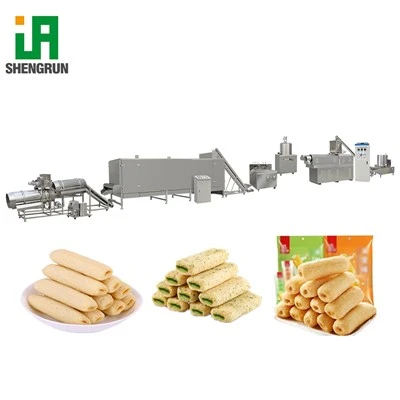
If you are interested in learning more about how our snack food production lines can optimize your raw material use, or if you are considering purchasing a production line for your snack food business, we would love to have a discussion with you. Please reach out to us to start a procurement negotiation. We are here to help you take your snack food production to the next level.
Fried Snacks Processing Machine References
- "Food Process Engineering and Technology" by Gustavo V. Barbosa – Canovas, Julio M. Aguilera, and Marcelo N. Kersten.
- "Handbook of Food Processing Equipment" by Pierre – Yves Corrieu.
- Industry reports on snack food production and waste management.
Jinan Shengrun Machinery Co., Ltd.
We are one of the most professional snack food production line manufacturers and suppliers in China, featured by quality products and good price. Please rest assured to buy durable snack food production line for sale here from our factory. Contact us for more details.
Address: 1817 Rongce Center, No.3179 Qilu Avenue, Xingfu Street, Huaiyin District, Jinan City, Shandong Province
E-mail: sales@foodgm.cn
WebSite: https://www.food-gm.com/
