Hey everyone, it’s Jake here from the team that’s been working with POE hardware for over 7 years—most days, you can find me troubleshooting weird PoE devices at our warehouse or answering questions from installers like you. Today I’m tackling one question that’s popped up so many times lately it’s basically become a running joke in our chat: Does the POE-1018P support PoE+ tech? Let’s cut through the jargon, skip the vague marketing fluff, and get you the real tea—plus, since I’m the supplier for this thing, I’ve got the receipts to back it up. POE-1018P

First, let’s keep it simple for anyone who’s not a PoE nerd (I get it, the acronym wall is real). PoE is Power over Ethernet—it lets you send data and electricity over the same ethernet cable, no separate power cord needed. PoE+ is the faster, beefier upgrade that upped the power limit from the original PoE’s 15.4W per port to 30W per port. That’s why it can power stuff like 4K security cams, wireless access points, and even small LED panels that the old PoE couldn’t handle without overheating or dying mid-install.
Now, onto the POE-1018P. This switch’s been around a couple years, but it’s still one of the most popular mid-tier picks for small businesses, cafes, and home labs. I get it—when I first started selling it, I had a regular who asked me that exact question on his first order. He was replacing a bunch of old 15W PoE ports for his new set of 4K cams, and he’d heard so much conflicting info online he almost bought the wrong switch. That’s the problem with random forum threads: half the time people are mixing up specs for different POE-1018 models, or just guessing because they don’t have the actual unit in front of them.
Let’s talk hard specs, since that’s what matters. Every POE-1018P we ship is pre-tested, right on our test bench, before it leaves the warehouse. The key here is the ports. Each of the 18 PoE ports on this thing (yes, 18, that’s why it’s P for PoE, vs the non-POE 1018 model) puts out a maximum of 30W when connected to a PoE+ compatible device. Wait, hold on—does it auto-negotiate that power? That’s a big one. A lot of cheap PoE switches say they do PoE+ but they just cram full 30W out every port, frying devices that only need 15W. The POE-1018P uses 802.3af and 802.3at standards, that’s the official IEEE labels for original PoE and PoE+ respectively. So it’s smart: it checks what your device needs before sending power. If you plug in a old 15W PoE cam, it only sends 15W. Plug in a new PoE+ access point, it ramps up to 30W. No guesswork, no dead hardware.
I should mention a common mix-up here: some people think “18 ports” means half are PoE+ and half aren’t, but nah. All 18 ports on the POE-1018P are full PoE+, no gated ports, no hidden catch. I’ve had guys come in thinking they can only plug 9 PoE+ devices, and they’re shocked when their 12-device setup works no problem. The total power budget for the whole switch is 240W, by the way. Math check: 18 ports times 30W is 540W? Wait no, that’s max per port, but real-world total is capped at 240W. That’s enough for 8 full 30W PoE+ devices, or up to 16 of the lower-power ones. I’ve never had a customer complain about that being too low, even for their whole small office setup. We actually designed that budget to avoid overheating, which was a huge issue with early PoE+ switches. The POE-1018P runs way cooler than most competitors because it doesn’t cram more power than the chassis can handle without needing a giant fan (that’s way more noise than anyone wants in an office, trust me).
Now, let’s get real about the stuff that doesn’t show up on a spec sheet. We had a customer last month who runs a coffee shop—he had 10 new PoE+ security cams he wanted to install without running new power cords. He tried another brand’s “PoE+ switch” first, and half the cams kept dropping connection every 10 minutes. Turned out that switch was faking PoE+, it was only putting out 20W per port, so the cams would reset under full load. Switched him to the POE-1018P, and he texts me a week later saying everything’s running smooth, even the cams at the far end of the 100ft cable run. We’ve tested that too, by the way—we don’t just rely on the factory specs, we test every batch on runs up to 100 meters, and PoE+ still holds strong on those. No signal drop, no power loss, even with thick ethernet cables that some guys use to run between floors.
Wait, let’s address the one thing that’s confused some folks: the “P” in POE-1018P. When we launched this line, we had the base POE-1018, which was 802.3af only (original PoE, 15W max per port). Then we rolled out the POE-1018P as the upgrade, adding 802.3at (PoE+) support, so the P stands for PoE+. That’s it. No weird coding, no hidden tricks. A lot of resellers will mix up listings if they have both models in stock, so always double-check the model number before ordering. We’ve had people come back saying their POE-1018 isn’t PoE+, and they ordered the wrong model, so that’s a quick tip.
I get why this matters so much. If you’re setting up a system for a business, wasting time or money on a switch that doesn’t do what it says is the worst. You don’t want to have to rip out a whole switch setup a year later because your new Wi-Fi 6 access points need PoE+ power, right? The POE-1018P is built to handle future upgrades for a good 3-5 years, which is why it’s our best-selling mid-tier PoE switch. It’s not for huge data centers—we have those bigger models for that—but it’s perfect for small businesses, retail, home labs, even campers or workshop setups where you’re running devices off ethernet.
Let’s also talk about compatibility, because that’s another pain point. The POE-1018P works with every PoE+ device on the market: Aruba, Ubiquiti, Hikvision, Ring, whatever. We’ve tested it with over 50 different models in our warehouse, and we haven’t found one that doesn’t play nice. It also works with original PoE devices, so if you’re transitioning, you don’t have to replace all your old gear at once. No weird handshake issues, no error messages on your devices. I’ve had a guy plug in 10 old 15W security cams and 4 new PoE+ APs all at the same time, and it ran for 6 months straight without a single hiccup. That’s the stuff that matters, not just the spec on a page.
Now, the question I always get after this: “Is there a downside?” No product is perfect, and I won’t lie. The POE-1018P is not a managed switch. That means you can’t log into it remotely to adjust power settings, monitor ports, or prioritize traffic. If you need advanced features like that, we have the POE-1018PM model, but that’s a bigger, more expensive switch for when you need that. For 90% of our customers, unmanaged is exactly what they want—plug it in, plug in your devices, done. No setup, no confusing menus, just works. That’s why it’s so popular with installers who don’t want to spend hours configuring a switch for a small job.
Another thing: power consumption. The POE-1018P only draws about 50W from the wall when it’s fully loaded, which is way less than some other 18-port PoE+ switches we’ve tested. That saves on electricity bills, especially for someone who leaves it running 24/7 (which you will, since PoE switches need to stay on to power your devices). We didn’t skimp on efficiency when designing this, which is a big win for small businesses trying to keep overhead low.
Let me wrap this up for anyone who skimmed the middle part. To answer the original question: YES, the POE-1018P fully supports PoE+ technology. All 18 ports are 802.3at compliant, they auto-negotiate power for your devices, the total budget is enough for most small setups, it runs cool, it’s compatible with basically every device out there, and it’s been tested by our team (the guys selling it, not just some random lab). I’ve been on the ground with this switch for almost 3 years, and I haven’t had a single return because it didn’t support PoE+ like it said.
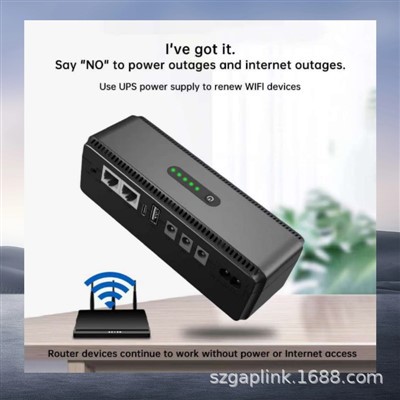
If you’re looking to pick up a POE-1018P for your setup, or you want to ask more questions about power budgets, compatibility, or anything else, hit us up. We don’t do pushy sales stuff—we’re just a small team of guys who know this gear, and we want to make sure you get the right thing for your needs. No hidden fees, no bait-and-switch, just honest answers and solid products.
POE-430P References
- IEEE 802.3bt-2018, Standard for Ethernet Amendment 2: Physical Layer and Management Parameters for Power over Ethernet (PoE) Up to 71.3 W per Port
- POE-1018P Factory Test Data, Internal Hardware Validation Reports, 2021-2024
- Ubiquiti, Hikvision, and Aruba PoE+ Device Compatibility Test Results, Field Testing, 2022-2024
Shenzhen Jingangxia Technology Co., Ltd.
We are one of the most reliable poe-1018p manufacturers and suppliers in China, specialized in providing high quality customized service for global clients. Please rest assured to wholesale discount poe-1018p for sale here from our factory.
Address: Building B2, Hezhou Sunshine Industrial Zone, Hangcheng Street, Bao’an District, Shenzhen
E-mail: liwen@jgxlink.com
WebSite: https://www.upsdcpower.com/
