If you’ve ever visited a stone yard, stood in a kitchen showroom, or wandered through a luxury hotel lobby, chances are you’ve come across natural quartzite—whether you realized it or not. As a supplier who’s spent the last 12 years hunting for, processing, and shipping this stone to clients across residential, commercial, and hospitality spaces, I’ve watched dozens of homeowners, architects, and interior designers fall in love with quartzite not just for its durability or mineral beauty, but for the quiet, intentional patterns that make every slab feel like a one-of-a-kind piece of the Earth. A few years back, I had a designer come to our warehouse looking for a stone for a mountain getaway they were building. They’d rejected quartz (the engineered, man-made stone) because it felt too uniform, and marble because it was too prone to etching. Halfway through our second aisle, they stopped in front of a slab from a Brazilian quarry and said, “This has a story—look at how the lines flow.” That’s the magic of natural quartzite: its patterns aren’t random. They’re coded by the planet’s slow, violent, beautiful work, and learning to read them turns picking a slab from a chore into a conversation with geology. Let’s break down the patterns you’ll see in quartzite, where they come from, and what that means for your next project. Natural Quartzite

First, a quick refresher on what natural quartzite actually is, because a lot of folks mix it up with quartz or even granite— and that mix-up is part of why its patterns are so unique. Quartzite forms when sandstone, a sedimentary rock made of tiny quartz grains and mineral cement, gets buried deep under the Earth’s crust, subjected to intense heat (300 to 700 degrees Celsius) and pressure (100 to 800 megapascals) over millions of years. That heat and pressure fuse the quartz grains together so tightly that the original sandstone structure dissolves, leaving a nearly pure quartz rock with a hardness of 7 on the Mohs scale—harder than granite, scratch-resistant, and non-porous when properly sealed. That metamorphic journey is where all its patterns start.
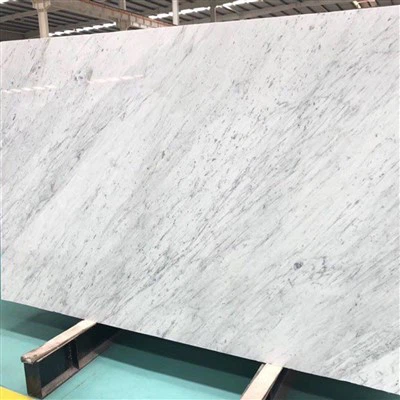
The most common pattern you’ll see in quartzite is veining, but not just any veining—its veining is distinct from the thin, wispy lines you find in marble, or the speckled, random spots in granite. Quartzite veining forms when mineral-rich fluids seep through the rock during its metamorphic phase, or when smaller cracks that formed as the rock adjusted to pressure get filled with different minerals. The type of vein depends on which minerals are present: iron oxides turn veins red, orange, or brown; manganese makes them black or dark gray; and even tiny amounts of graphite can leave soft, silvery streaks that catch the light. The flow of the veins tells a story too. If the veins are long, straight, and parallel, that’s a sign of uniform, directional pressure during metamorphism—think of sand being pressed under a weight, aligning in neat lines. I’ve shipped slabs from a quarry in Montana with that exact pattern; they look crisp, almost painted, and are a popular pick for modern minimalist kitchens where you want subtle interest without distraction. Then there’s organic veining, the kind that twists, forks, and meanders like riverbeds or tree roots. That forms when pressure was less uniform, or when fluids filled cracks in unpredictable ways. The Brazilian quarry I mentioned earlier is famous for this—their quartzite has soft, milky gray base tones with veins that look like they’ve been pulled through wax, and every slab has a different arrangement. Last year, we sold a 12-foot slab of that stone to a resort in Aspen for their lobby reception desk; the manager told me guests would stop and trace the veins like they were reading a map.
Next up is clouding, a pattern that’s the bread and butter of many light-toned quartzites. If you’ve seen a soft, off-white quartzite with gentle, hazy patches of cream, pale gray, or even faint peach, that’s clouding. It forms when the original sandstone had small, irregular pockets of different minerals or organic matter that didn’t fully dissolve during metamorphism. Instead of forming distinct veins, these pockets dispersed slightly, creating that soft, blended, almost mist-like effect. I always tell clients that clouding is what makes quartzite feel warm, not cold the way polished marble can. A common variation here is gradient clouding, where the tone shifts gradually across the slab—pale gray at the edges, deepening to warm taupe in the center. We recently worked with a custom home builder in Seattle who used this gradient quartzite for their main bathroom walls. They didn’t want the stark contrast of tile, and quartzite’s non-porous surface meant it wouldn’t stain from shower products. The clouding pattern meant the wall wasn’t flat; it had depth, like a soft sky, and the natural variation from slab to slab gave the space a sense of uniqueness that engineered stone can’t replicate. A word of caution here: cheap imports sometimes try to pass off dyed stone or engineered quartz as “natural clouded quartzite,” but real clouding has subtle, soft edges, not harsh, saturated color lines. If you run your hand over the slab, you won’t feel any texture from the clouding, either—those mineral pockets are fused into the stone, not sitting on top.
Another pattern that’s less talked about, but super distinctive, is brecciated quartzite. Breccia is a rock made of broken fragments of older rock that get cemented back together, and brecciated quartzite happens when a part of the metamorphic rock cracks, and those fragments get carried away by fluid pressure before being fused back into the matrix. The result is a slab with irregular, angular chunks of different quartzite tones—ivory, deep gray, muted brown—glued together with a finer, more uniform quartz cement. This pattern is bold, dramatic, and a favorite for statement pieces: fireplace surrounds, accent walls, or large kitchen islands. I first encountered brecciated quartzite on a trip to a quarry in Portugal a few years ago. The slabs there have chunks that range from palm-sized to just a few inches, in shades that contrast sharply—snow-white chunks against deep charcoal gray matrix. We’ve sent that stone to a wine cellar in Napa Valley, where the bold pattern fits the rustic, elegant vibe, and to a downtown Chicago condo that used it for a media wall as a conversation starter for guests. The key to picking a good brecciated quartzite is looking for how the chunks are arranged; some slabs have a tight, clustered pattern that feels almost mosaic-like, while others have larger, spaced-out chunks that feel more organic. It’s also important to confirm that the fragments are natural, not added in a factory—real brecciated quartzite has fragments that are slightly worn at the edges from being moved before re-cementation, while artificial versions have sharp, perfectly cut chunks.
One more pattern worth noting is layering, sometimes called banding. This is when quartzite has thin, parallel layers of different tones, like a stack of construction paper. It forms when the original sandstone had distinct layers of different mineral content, and metamorphism didn’t fully blend those layers together. Banding is most common in high-pressure metamorphic zones, and often goes hand-in-hand with veining. For example, a slab might have soft gray bands half an inch thick, with thin black veins running across them. I used banded quartzite in my own kitchen renovation three years ago; I picked a slab from a quarry in Norway with pale beige bands and faint brown veining, and I love how the pattern feels structured but not rigid. It’s easy to pair with other materials—warm wood, matte black fixtures, or even soft textiles—and it works in both traditional and contemporary spaces. A lot of people ask me if banding means the stone is weak, but in fact, those layers are fused so tightly by metamorphism that banded quartzite is actually one of the most durable varieties we sell. We’ve had slabs of it installed in commercial restaurant kitchens for five years now, with almost no scratches or etch marks.
Now, here’s the part that matters when you’re choosing a quartzite for your project: no two patterns are exactly alike, and that’s a feature, not a bug. A lot of new clients come in asking for “a slab with the same pattern as the sample,” but what they don’t realize is that even two slabs cut from the same block (the large piece of rock pulled from the quarry) can have subtle differences. The sample we have in our showroom is a representative piece, but when you’re picking a slab, you’re buying a piece of the Earth’s history, so the pattern is part of what makes it special. That’s why we always encourage clients to come to our warehouse to hand-select their slabs, rather than ordering online. When you see the stone in person, you can check for how the pattern fits your space: a large island needs a slab with a continuous, flowing pattern that doesn’t cut off awkwardly, while a small backsplash can work with a more detailed, compact pattern. For example, a brecciated quartzite with large chunks might look overwhelming on a 3-foot kitchen backsplash, but perfect for a 10-foot island. A slab with long, parallel veins might be ideal for a large accent wall, where the lines can be oriented to draw the eye up or across the room.
I also get asked all the time about staining and maintenance related to these patterns, and that’s a common misconception. The veining, clouding, or brecciated fragments are all part of the same hard quartz structure, so the pattern doesn’t make the stone more prone to damage. The only thing you need to do is seal the quartzite once every 10 to 15 years (unlike marble, which needs sealing every year or two) to keep it non-porous. We always include a free sealing service for any client who buys a full slab from us, so they don’t have to worry about it. The one thing to avoid is harsh chemicals—bleach, acidic cleaners like vinegar or lemon juice—even on light-toned clouded quartzite, because they can etch the surface and make the pattern look dull. But regular cleaning with mild soap and water is all it takes to keep the stone looking like new for decades.
Over the years, I’ve learned that the best projects using quartzite aren’t just about picking a pretty stone—they’re about picking a stone whose pattern fits the space’s story. A mountain home gets a slab with twisting organic veins that echo the flow of a nearby creek. A modern city loft gets slab with crisp, parallel veins that feel sleek and intentional. A historic restaurant gets a brecciated quartzite slab that matches the building’s rustic, timeless charm. That’s why we work directly with quarries all over the world, not just to source stone, but to understand how each deposit’s unique geologic history shapes its patterns. We visit quarries at least twice a year, talk to the geologists who work there, and track how pressure, heat, and mineral content create the veining, clouding, and other patterns that our clients love.
If you’re in the planning stages of a project—whether it’s a new kitchen, bathroom, fireplace, or commercial space— and you want a stone that has character, durability, and a pattern that feels like it was made just for your space, we’d love to help. Hand-selecting a natural quartzite slab is a process, not a transaction, and we’re here to walk you through every step: from explaining the different patterns to helping you visualize how a slab will look in your space, and providing all the resources you need for installation and maintenance. We don’t do one-size-fits-all; every project is different, and every slab has a unique story to tell. Reach out to start a conversation about your quartzite needs today.
Sintered Stone References
Blatt, H., Tracy, R. J., & Owens, B. E. (2006). Principles of Sedimentary Petrology. W.H. Freeman and Company.
Yardley, B. W. D. (1989). An Introduction to Metamorphic Petrology. Longman Scientific & Technical.
Price, N. J. (1996). Rock Deformation: Principles, Experiments, and Structural Applications. Cambridge University Press.
Xiamen Yigong Import and Export Co., Ltd.
As one of the most professional natural quartzite suppliers in China, we also support customized service. With abundant experience, we warmly welcome you to buy high quality natural quartzite for sale here from our factory. For price consultation, contact us.
Address: No.850-2 Xingxi Road, Houxi Town, Jimei District, Xiamen
E-mail: ella@xmyigong.com
WebSite: https://www.yigongstone.com/
