If you’ve ever worked with PVC compounds, you know that high-viscosity raw materials aren’t just tricky—they’re straight-up chaotic. Thick, goopy PVC pastes, plasticizer blends loaded with dry powder, and unplasticized PVC (UPVC) resins mixed with molten stabilizers act like stubborn glue half the time, sticking to every surface in sight, clumping up lines, and throwing off your entire production flow. As a supplier of PVC automatic compounding and feeding systems, I get it—we built our whole business around fixing exactly this headache, not just selling equipment that works for easy, low-viscosity batches. PVC Automatic Compounding and Feeding System
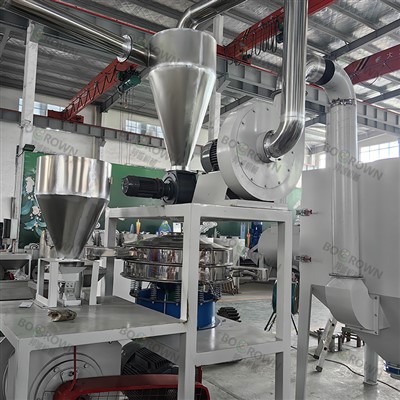
Let’s break down how our systems handle that thick, unforgiving stuff, without the jargon dumps or vague “magic” claims you see from some random vendors. First, let’s get one thing straight: high-viscosity PVC raw materials aren’t a monolith. There’s paste PVC that’s like warm honey or even taffy, plastisols loaded with resin that sit somewhere between paint and thick syrup, and dry blends (called “dry mixes”) that, when paired with liquid plasticizers, turn into that stringy, impossible-to-pump gunk that clogs hoppers and clogs valves. Our design starts with mapping each specific material’s viscosity curve before it even hits the machine—because a system that works for 10,000 cP paste PVC will fall apart for a 50,000 cP PVC compound mixed with a heavy metal stabilizer. That’s step one: personalization isn’t a luxury here, it’s non-negotiable.
First up, the feed system’s heart: the hoppers and feeding mechanisms. Standard gravity feeders hate high-viscosity stuff. Gravity just can’t pull thick material up a line or through a nozzle without it sticking, or getting stuck in clumps. So we don’t use those. Instead, we rely on two main feeding technologies tailored to viscosity ranges: auger feeders with variable pitch and paddle-style precision feeders. Wait, let’s get specific. For pastes that are 50,000 to 100,000 cP—think the stuff used for PVC flooring or automotive trim—we use augers with a “soft-pitch” design, not the sharp, tight-pitch augers you’d use for pellets. The wider, slower pitch pushes thick material forward without compressing it (which would make it even thicker, by the way) and the surface of the auger is coated with food-grade, non-stick PTFE that’s textured just enough to grip the material but not enough to cause it to shear (shearing is a big no-no here—shearing PVC causes it to break down, leading to discoloration and reduced strength). For even thicker stuff—like 150,000 cP PVC blends used for heavy-duty pipes—we pair that auger with a small, variable-speed agitation paddle inside the hopper. The paddle spins slowly, not fast enough to aerate the material (aeration causes inconsistency in compounding), but fast enough to prevent clumping and keep the material flowing toward the auger. We set that paddle speed based on real-time viscosity data pulled from a sensor right at the hopper’s outlet, so it adjusts automatically if the material thickens or thins mid-run. No manual tweaking required, which means less downtime for your team.
Next, the compounding part—this is where a lot of systems fail with high-viscosity materials. Compounding is just mixing PVC with plasticizers, stabilizers, pigments, and fillers to get a consistent blend, but when that mix is thick, standard mixers (like high-shear mixers) are too rough—they over-shear the PVC, causing it to cross-link (which makes it brittle) or burn it, leading to discoloration. Low-shear mixers, on the other hand, don’t get the material properly combined, leaving streaks of un-blended resin or plasticizer. Our system uses a dual-stage compounding unit that splits the difference (and we’ve tested this on every high-viscosity PVC we’ve encountered over 12 years in the game). First stage is a planetary mixer—think of a giant kitchen stand mixer on steroids, but industrial. The planetary blades spin around the bowl and also on their own axis, so they fold material in instead of slamming it. For high-viscosity stuff, we run this stage at 30 to 50 RPM, depending on viscosity, and we inject liquid plasticizers gradually in 10% increments while mixing, not all at once. Adding all the liquid at once makes the material slump even more, which causes clumping. The planetary mixer handles the thick stuff without shearing it, and it can mix batches up to 2,000 liters without leaving a single spot un-blended. Then, we have a second stage: a static in-line mixer, which is a series of stationary baffles inside a tube that the compound flows through. This is where we nail the final consistency, and because it’s static, it doesn’t add any shear—just gentle turbulence that breaks up tiny clumps that the planetary mixer missed. We also have a temperature sensor right after the static mixer, because high-viscosity PVC can heat up from friction if it’s mixed too fast, and overheating is a killer for PVC. If the temp hits 190°C (a common threshold for PVC breakdown), the system automatically slows down the mixer and increases the flow rate to cool it down without stopping production. That’s the kind of real-time adjustment that makes our system work when others crash.
Now, the transfer part—getting the compound from the compounding unit to the downstream processing equipment (like extruders for pipes or calenders for sheets) is where most systems have their biggest problem with high-viscosity materials. Pneumatic transfer systems use air to move material, but air can shear high-viscosity PVC, cause it to degrade, and even clog lines because thick material doesn’t move well with air. So we use positive displacement gear pumps for transfers when viscosity is over 80,000 cP, and progressive cavity pumps for the thickest stuff (100,000 to 200,000 cP). Wait, let’s explain that simply. A gear pump uses two interlocking gears that turn inside a housing, creating a sealed chamber that pushes material through the line. It’s gentle, because the gears don’t chop or shear the material—they just move it forward. For even thicker stuff, progressive cavity pumps have a single screw that turns inside a helical rotor, creating continuous, low-pressure flow that’s perfect for goopy PVC blends. We also line all transfer lines with the same PTFE coating as the augers and mixer blades, because even a tiny spot of sticky residue can build up over time and cause clogs. And here’s a trick we learned from a client that makes all the difference: we add a gentle recirculation loop to the transfer lines. If the downstream equipment is running slow (like if an extruder has a brief downtime), the system sends the high-viscosity compound back to the compounding unit’s holding tank, so it doesn’t sit in the line and harden or thicken up. No more shutting down the whole line to scrape gunk out of transfer lines—saves hours of downtime a month for our clients.
Wait, I should also talk about how we handle batch consistency, because that’s the whole point of an automatic system, especially with high-viscosity materials. You don’t want every batch of pipe flooring or window trim to have slightly different viscosity, because that changes how it processes and its final properties. Our system uses loss-in-weight feeders for every raw material, not volumetric feeders. Volumetric feeders just measure volume, which works for pellets, but for thick pastes, a volume measurement can be off by 10% or more because the material compacts differently. Loss-in-weight feeders weigh every single component as it’s added to the mix, so even if a batch of paste PVC is slightly thicker or thinner than the last, the system adjusts the feed rate automatically to keep the ratio correct. For high-viscosity materials, that consistency is non-negotiable—one off-balance batch can ruin a whole run of product, and no one wants that.
Now, let’s be real—no system is perfect, especially with high-viscosity PVC that can vary from batch to batch, even from the same supplier. So our systems have built-in fail-safes that we didn’t see in other brands when we started out. For example, if a sensor detects that material is getting stuck in the hopper outlet (which would lead to under-feeding), the system doesn’t just shut down—it triggers a small, low-pressure pulse of compressed air behind the auger to nudge the material loose, without blowing it all over the place. We also have a self-cleaning mode that runs at the end of each shift. It uses a small amount of clean plasticizer resin and a low-speed mixer to flush the system, so there’s no leftover PVC hardening inside the unit over the weekend. One of our clients that makes PVC door frames told us that before switching to our system, they had to take the entire compounding unit apart once a week to clean it, costing them 8 hours of production a week. Now, they only have to do a deep clean once a month, saving them over $100k a year in downtime alone.
Let’s also address a common misconception: some people think that handling high-viscosity PVC requires more power, but that’s not true. Our system is actually designed to be energy-efficient, because we don’t waste power on over-speeding mixers or pumps. The real key is matching the technology to the material, not cramming in more power. For example, a standard high-shear mixer might use 50 kW of power to mix a 1,000-liter batch of high-viscosity PVC, but our planetary mixer only uses 28 kW, because it’s using the right mixing action, not brute force. That saves our clients money on utility bills, which is a big win in an industry where margins are tight.
So, if you’re dealing with high-viscosity PVC raw materials and your current system is causing clogs, inconsistent batches, or endless downtime, our automatic compounding and feeding systems are built specifically for that. We don’t sell one-size-fits-all equipment—we work with you to test your exact raw materials, adjust the auger pitch, mixer speed, and pump size, and make sure the system fits your production line, whether you’re running 1,000 liters an hour or 10,000 liters an hour. No vague guarantees, no generic parts, just equipment built to handle the stuff that makes other systems throw in the towel.

If you’re tired of fighting thick, stubborn PVC materials and want a system that actually works, reach out to our team to set up a consultation. We can send a test unit to your facility to run trials with your raw materials, show you the real-time data, and help you figure out exactly what you need to cut downtime, improve batch consistency, and boost your production. Don’t let high-viscosity raw materials hold your operation back anymore.
Crushing and Grinding Integrated Machine References
- PVC Compounding: Fundamentals, Materials, and Processing, 2nd Edition, Smith, J., Plastics Engineering Series, 2021
- "Viscosity Effects on PVC Compounding and Feeding Systems", Journal of Industrial Plastics, Vol. 48, No. 3, pp. 412-427, 2022
- Automatic Material Handling for High-Viscosity Polymers, Lee, S., Manufacturing Engineering Association, 2020
- "PVC Degradation During Compounding: Mitigation Strategies", Polymer Degradation and Stability, Vol. 191, Article 109782, 2022
ZJG BC Machinery Co., Ltd.
As one of the most professional pvc automatic compounding and feeding system manufacturers and suppliers in China, we’re featured by quality products and good price. Please rest assured to buy cost-efficient pvc automatic compounding and feeding system for sale here from our factory. Contact us for custom service and OEM service.
Address: No.8 Lexi Road, Leyu Town, Zhangjiagang City
E-mail: sales@bcextruder.com
WebSite: https://www.bcextruder.com/
