If you’ve ever stood in the engine room of a commercial office building, a manufacturing plant, or a retail mall’s back-of-house electrical closet, you’ve probably glanced at a large, dusty metal cabinet lined with circuit breakers, switches, and small digital displays. That’s a GGD cabinet, and if you work in electrical procurement or facility management, it’s not just a piece of utility equipment—it’s the quiet backbone that keeps your operations from grinding to a halt. As a GGD cabinet supplier with over a decade of hands-on experience, I’ve spent thousands of hours walking job sites, troubleshooting hiccups, and explaining to clients why this unassuming enclosure is far more than a box with wires inside. Today, I want to pull back the curtain, break down how these systems actually work, and give you the clarity you need to make smarter choices for your projects. GGD Cabinet
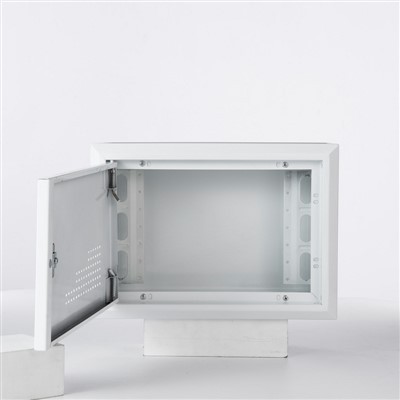
First, let’s get one common misconception out of the way right now: GGD isn’t an acronym for some vague technical term or a brand name. It stands for “General Distribution Cabinet,” a standard term for low-voltage power distribution enclosures that originated in China and is now widely used across global industrial and commercial markets. What makes GGD cabinets distinct from other distribution boxes, like the smaller consumer units in your home, is their design for high-load, high-reliability applications—think 380V three-phase power, the kind that runs conveyor belts, HVAC systems, and large server farms. Unlike flimsy plastic consumer units, GGD cabinets are built from heavy-gauge cold-rolled steel, treated with anti-rust coating, and engineered to withstand dust, humidity, and occasional rough handling on construction sites. That durability isn’t just a selling point; it’s non-negotiable for environments where an electrical failure can cost tens of thousands of dollars an hour in downtime.
Now, the core of how a GGD cabinet works boils down to three simple, sequential jobs: it takes incoming main power, splits it into controlled, usable sub-circuits, and protects every part of the system from overloads or faults. Let’s walk through the process step by step, starting from the moment power hits the cabinet’s main busbar.
Every GGD cabinet starts with a main incoming cable connection at the top or bottom of the unit, feeding into a set of copper busbars—thick, rigid metal rails that act like a highway for electricity. Unlike wires, which carry power point-to-point, busbars distribute power evenly across the entire cabinet, so every sub-component inside gets a consistent, reliable supply. For reference, a standard GGD cabinet might have three main busbars for the three phases of AC power, plus a neutral bar and a ground bar to handle the return current and safety grounding, respectively. This design is key: it eliminates the voltage drops that come with daisy-chaining wires, which means even the farthest sub-circuit in a large facility gets the same stable power as the main feed.
Next up is the main incoming switch, located right after the busbars. This is usually a large circuit breaker or an isolator switch, and its job is simple: it’s the master on-off for the entire cabinet. If there’s a critical emergency, facility managers or electricians can flip this switch to cut power to every sub-circuit in seconds, without having to shut down individual components one by. But this isn’t just a safety measure—most modern GGD cabinets also have an integrated meter here that displays real-time data: voltage, current load, power factor, and even energy usage. For a factory manager, that data is gold; it lets them track which machines are drawing the most power, spot inefficiencies, and avoid overloading the system before it causes a fault.
Once power passes through the main switch and busbars, it’s routed to the sub-distribution section of the cabinet, which is where the “distribution” part of GGD comes in. Most GGD cabinets are modular, meaning you can add or remove sub-circuit breakers (or MCBs, miniature circuit breakers) depending on your needs. A small retail store might only need a dozen sub-circuits for lighting, POS systems, and HVAC, while a large automotive manufacturing plant could have 50 or more sub-breakers running assembly lines, robot arms, and water pumps. Each sub-breaker is wired directly to the busbars, and rated for a specific maximum current—say 16A for a lighting circuit, 63A for a large compressor. This modular design is one of the biggest reasons GGD cabinets are so popular: you can customize the cabinet to match your exact load requirements, no need to pay for extra space or capacity you don’t need.
But the most important part of how a GGD cabinet works is its built-in safety protection, which is layered to stop small issues from becoming catastrophic. Let’s break down those protections one by one:
First, every sub-circuit has its own miniature circuit breaker (MCB), which trips automatically if the current exceeds its rated limit. If a lighting fixture short-circuits and draws 20A on a 16A circuit, the MCB will flip open in milliseconds, cutting power to that specific circuit before the wire overheats and starts a fire. That’s a huge benefit over old-style fuse boxes, where a blown fuse could take hours to replace and leave a whole section of a building without power. Modern MCBs for GGD cabinets also have overload protection, not just short-circuit: if you plug too many devices into a single circuit and the current rises slowly over a few minutes, the MCB will trip before it reaches a dangerous level.
Beyond the MCBs, most GGD cabinets also include residual current devices (RCDs), or ground fault circuit interrupters (GFCIs), in key circuits, especially for outdoor equipment or areas with high moisture, like kitchens or laundry rooms. An RCD constantly monitors the difference between the current going out on the phase wire and the current coming back on the neutral wire. If even a tiny amount of current (as little as 30mA) leaks to ground—say, a frayed wire touching a metal frame—the RCD trips instantly, preventing electric shock to anyone nearby. This is a non-negotiable for compliance with electrical codes in most countries, and it’s a feature I always recommend to clients working in high-risk environments.
For heavier-duty applications, like industrial motors or conveyor belts, GGD cabinets might also include molded case circuit breakers (MCCBs) with adjustable trip settings. Unlike standard MCBs, which have fixed current limits, MCCBs let you set the trip level to match the exact needs of the motor, so you don’t end up with unnecessary trips that stop production. Some advanced GGD cabinets even have integrated surge protection devices (SPDs), which clamp down on voltage spikes from lightning strikes or grid fluctuations, protecting sensitive electronics like servers or control systems from damage.
Another often-overlooked part of how GGD cabinets work is their enclosure design, which is far from just a box. The metal casing is not only sturdy—it’s rated for specific ingress protection (IP) levels, meaning it stops dust, water, and debris from getting inside. A GGD cabinet installed in a dry, indoor office might have an IP20 rating, which keeps out fingers and small debris, while a cabinet outside or in a dusty factory floor could have an IP54 rating, which is dust-tight and resistant to splashing water. The door of the cabinet also has a locking mechanism, to prevent unauthorized access to live parts, and most have vents or fans for heat dissipation, since all that copper busbar and wiring generates heat during operation. Overheating is a top cause of electrical failures, so proper ventilation is a critical part of the cabinet’s functionality—something cheap, unrated distribution boxes often skip, leading to shortened lifespans and higher failure rates.
Now, why does all this matter for your projects? I’ve seen too many clients cut corners on electrical distribution, only to regret it later. A high-quality GGD cabinet isn’t just a compliance box—it’s a long-term investment. Let’s put this in perspective: I once worked with a small textile factory that had installed a cheap, unbranded distribution box for their new dyeing line. Within six months, the box overheated, melted, and caused a 48-hour shutdown that cost them over $120,000 in lost production. They replaced it with three GGD cabinets, custom-sized for their 120A load, and in the five years since, they’ve had zero unplanned failures from distribution issues. That’s the kind of return on investment you don’t get from cheap, generic equipment.
What sets GGD cabinets apart from other distribution solutions, in my experience, is their balance of reliability, customization, and cost. Unlike more advanced systems like intelligent MCC panels (which have smart monitoring and remote control), GGD cabinets are built for straightforward, high-load applications where simplicity and robustness matter most. They’re not overcomplicated—they do exactly what they need to do, no more, no less. That makes them ideal for small to mid-sized factories, commercial buildings, retail centers, and even agricultural facilities, where you need reliable power without paying for features you’ll never use.
If you’re in the market for a distribution system for your next project, here are a few key things to keep in mind as you evaluate GGD cabinets. First, check the build quality: ask about the thickness of the steel (it should be at least 1.2mm for standard applications), the quality of the busbars (pure copper, not aluminum, which has higher resistance and can overheat), and the types of breakers used (prefer reputable brands like Siemens, Schneider, or Chint, which are tested to international standards). Second, think about scalability: will your load grow in the next few years? A modular GGD cabinet lets you add sub-circuits or upgrade breakers without replacing the entire unit, saving you money down the line. Third, confirm the IP rating matches your environment—indoor is different from outdoor, and dusty factory floors need a higher rating than a clean office.

As a GGD cabinet supplier, I’ve built my business on being transparent about how these systems work, not just selling a product. I don’t push overpriced add-ons you don’t need, and I don’t cut corners on build quality to underbid competitors. Every cabinet we sell is tested before it leaves our facility: we run continuity tests on every circuit, check the insulation resistance, and simulate overloads to make sure breakers trip at the correct level. That’s the kind of quality that gives my clients peace of mind, whether they’re outfitting a new coffee shop or a large manufacturing plant.
GGD Cabinet If you’re ready to talk through your specific needs—whether you need a small cabinet for a 50A load or a large custom unit for a full factory—I’m here to help. We can walk through your electrical requirements, review layout options, and make sure you get a GGD cabinet that’s reliable, compliant, and built to last. Don’t wait until a power outage disrupts your operations to invest in a distribution system you can trust. Reach out to discuss your project details today.
References
- International Electrotechnical Commission. (2018). Low-voltage switchgear and controlgear assemblies. IEC 60439-1.
- State Grid Corporation of China. (2020). Technical Specification for General Distribution Cabinets (GGD). Q/GDW 11357-2020.
- Underwriters Laboratories. (2021). Standard for Safety for Low-Voltage Switchgear and Controlgear Assemblies. UL 845.
- Electrical Safety Authority. (2022). Low-Voltage Distribution Systems: Installation and Maintenance Guidelines. ESA Publication 1245.
Shandong Qinghua Yike Electric Co., Ltd.
As one of the most experienced ggd cabinet manufacturers in China, we also support customized service. We warmly welcome you to buy durable ggd cabinet for sale here from our factory. If you have any enquiry about cooperation, please feel free to email us.
Address: No. 378 Taozhuang Village, Zaoyuan Town, Lanshan District, Linyi City, Shandong Province
E-mail: admin@sd-qhyk.com
WebSite: https://www.qhecobox.com/
