Hey there, thanks for hanging out—today I wanna talk about something that’s been bugging my forming equipment clients nonstop lately: electromagnetic interference (EMI). For those who don’t know, I run a forming equipment supply biz, so I see this mess play out first-hand every single day. If you’re running a metal stamping, hydroforming, or even a plastic extrusion shop, you’ve probably dealt with it too—maybe your CNC press acts up mid-job, your sensor reads like garbage, or worst case, the whole line goes down and kills a shift. Let’s break this down like we chat over a coffee, no boring textbook jargon (I’ll keep it real, I promise). Forming Equipment

First off, let’s ground this in what actually causes EMI in forming equipment specifically, not just generic factory noise. Forming rigs aren’t your average office PCs or even regular assembly lines—we’re talking giant motors that crank out hundreds of horsepower, high-frequency power converters to control press speeds, and those monster induction heaters we use for pre-forming metal blanks. Let’s take my most popular item: a 200-ton hydraulic stamping press. That thing has a variable frequency drive (VFD) to adjust how fast the ram moves, right? VFDs work by chopping up AC power into tiny, fast pulses to control motor speed, and that chopping is basically a EMI broadcast. Throw in proximity sensors along the press brake that tell the ram when to stop, load cells to measure pressure, and a whole HMI touchscreen for operators, and now you’ve got a messy web of electronics all picking up that VFD noise like a radio tuning into a distant station.
Wait, and it’s not just the big components. When we install our forming lines in factories, there’s always that one guy who skips the proper cable routing. Like, he runs the motor power cable right next to the sensor data cable. That’s a recipe for disaster. The power cable is carrying 480V AC at tens of amps, so it’s emitting a strong electromagnetic field, and the thin sensor wire is picking that up as random spikes. I saw this last month with a client in Detroit—their stamping press was randomly misaligning car door panels, and we traced it to the sensor cable being laid on top of the 3-phase power line. We moved ’em apart by a foot and a half, and boom, no more misalignment. That’s the stuff you don’t see coming until it’s breaking parts.
Now, what actual problems does this cause day-to-day? Let’s get specific, not just “it messes with electronics.” First, there’s the downtime. A client in Ohio was losing $12k a week on unplanned stops because their forming line’s HMI would freeze randomly mid-batch. Turns out the VFD for the main motor was emitting EMI that crossed into the HMI’s control circuit. They tried rebooting every time it froze, but that cost them parts, labor, and missed deliveries. Then there’s quality issues—like that Detroit shop I mentioned, but also stuff like load cells giving wrong readings, so they over-press a metal part and it cracks, or under-press and it’s too weak. I had another client who makes kitchen sinks—they noticed 2% of their sinks had weird, inconsistent deep draws, and it was because the height sensors were glitching from EMI, so the ram was stopping a fraction of a second too early. That’s 2% of product going right to scrap, and that adds up fast.
Wait, and there’s the hidden long-term stuff. EMI doesn’t just mess with the line that day—it can damage electronics over time. Those cheap sensor modules? The spikes from EMI can fry their microchips in six months instead of the three years they should last. I had a repeat client last year who had to replace 12 proximity sensors in a year, instead of the normal 1 every three years, because of unfiltered VFD noise. That’s extra cost they didn’t budget for, and that’s the stuff that makes guys like me want to bang their head against a wall—because it’s totally fixable if you catch it early.
Now, let’s talk about why this is extra annoying for forming equipment specifically, not other industrial gear. Unlike, say, a packaging line that’s just moving boxes, forming lines have super precise, real-time controls. A packaging line can be a few milliseconds off and not cause a problem, but a stamping press? If the sensor is off by even 10 milliseconds, the part is ruined. Also, forming equipment is usually bigger, so those power cables are longer, and the motors are way more powerful, so the EMI is way stronger than, say, a small conveyor. Throw in the fact that many older factories (the ones that make up most of the Midwest’s manufacturing) have outdated electrical infrastructure—their wiring isn’t grounded properly, so there’s more stray current that adds to the EMI mess. We recently retrofitted an old 1980s forming line for a client in Chicago, and we had to re-do their entire ground network just to fix the EMI issues from the VFDs. That cost them more on top of the new forming equipment, and it all came from not planning for EMI up front.
So, what do we actually do about this as forming equipment suppliers? Let me be real—when I sell a rig, I don’t just drop it off and bounce. Last year, I started including EMI mitigation as part of the standard setup for all our forming lines, not just a optional add-on. What does that look like? First, we spec the right components. We don’t cheap out on VFDs that don’t have built-in EMI filters—we use models that meet IEC 61800-3, which is the standard for industrial drives. We also use shielded cables for all the sensor and control wiring, not the plain copper stuff. Shielding works by blocking those electromagnetic fields, so the sensor doesn’t pick up the noise from the power line.
Then, there’s routing. We train our installers on how to run cables: power cables go in one metal conduit, control/sensor cables go in another, minimum distance between them is 18 inches (we write that into the installation guide now). If they have to cross, we make it a 90-degree angle, because crossing at an angle cuts down on the EMI transfer way more than running parallel. And grounding—we make sure every component is properly grounded to a dedicated ground rod, not just the factory’s general ground, which can have random voltage spikes from other equipment.
Wait, but it’s not just on us as suppliers—some of it is on the client when they’re setting up the line. I always tell new clients: “Before you even pick where to put the forming rig, look at your existing electrical layout. If there’s a big welding line or a crane motor right next to where you want the press, that’s gonna add more EMI.” I had a client who wanted to put a hydroforming press right next to a spot welder station, and I talked him out of it. We moved the press 20 feet away, and he never had a single EMI issue there. That’s the kind of heads-up I give every customer, because I’d rather them avoid the headache than deal with it later.
Also, I recommend regular checks. EMI can creep in over time—cables get crushed, shielding wears out, grounds get loose. So every six months, I tell clients to test their line with a simple EMI meter (I even give them a free quick-start guide when we install the equipment). Just run the line for an hour, check the sensor readings, the HMI, and if anything’s off, we can troubleshoot fast. Last month, a client in Indianapolis texted me a video of their press acting weird, and we walked them through checking the cable shield—turns out a forklift had nicked it, so replacing that shield fixed it in 10 minutes. That’s way better than a 8-hour downtime.
But here’s the thing I hate most: some guys still think EMI is just “factory noise” that you just have to live with. No. You don’t have to. I’ve seen clients go from losing $15k a week to downtime and scrap to losing $2k a week after we fixed their EMI issues. That’s a huge difference. And it’s not even that expensive—most of the fixes are just better wiring, filters, and a little planning, not a whole new rig. I had a small business client who makes custom metal signs, he had a used forming press, and he was having EMI issues, so we added a $120 EMI filter to the VFD, re-routed the sensor cable, and that fixed all his problems. He was so stoked he referred three other guys to me last month.
Wait, let’s also address a common myth. Some people think that only new forming equipment has EMI issues, or that old equipment doesn’t. No—old equipment has worse EMI sometimes, because they used unfiltered VFDs back in the day, or their wiring is outdated. We retrofitted a 1995 stamping press last year, added new filters, shielded cables, and a better ground, and it ran like a new press after that. So it doesn’t matter if you buy brand new or used, EMI is a thing you have to plan for.
Another thing: regulatory stuff, but I don’t wanna bore you with that. The big one is that EMI can mess with other equipment in the factory, not just your forming line. Like, if your press is emitting too much EMI, it can mess with the warehouse’s barcode scanners or their computer network. I had a client whose entire inventory tracking system glitched because of EMI from their forming line, and they lost $8k in miscounted parts before we fixed it. That’s another hidden cost—EMI doesn’t stay in one line. It spreads.
So, what’s the takeaway here? If you’re dealing with forming equipment, EMI isn’t something you can ignore. It causes downtime, scrap, extra repair costs, and even messes with other parts of your factory. The good news is that it’s totally solvable—with the right components, proper installation, and a little planning, you can eliminate almost all of it.
As a forming equipment supplier, my job isn’t just to sell you a press or a stamping line—it’s to make sure it works for you, no headaches. That’s why I spend so much time on EMI stuff, because I’ve seen too many clients get burned by cutting corners or not planning ahead. If you’re in the market for new forming equipment, or you’re having issues with your current rig glitching from EMI, reach out to me. I’ll walk you through what you need, no sales pitch, just real advice from someone who’s been in the game for years. We can go over your setup, see what’s causing the noise, and get your line running smooth again.
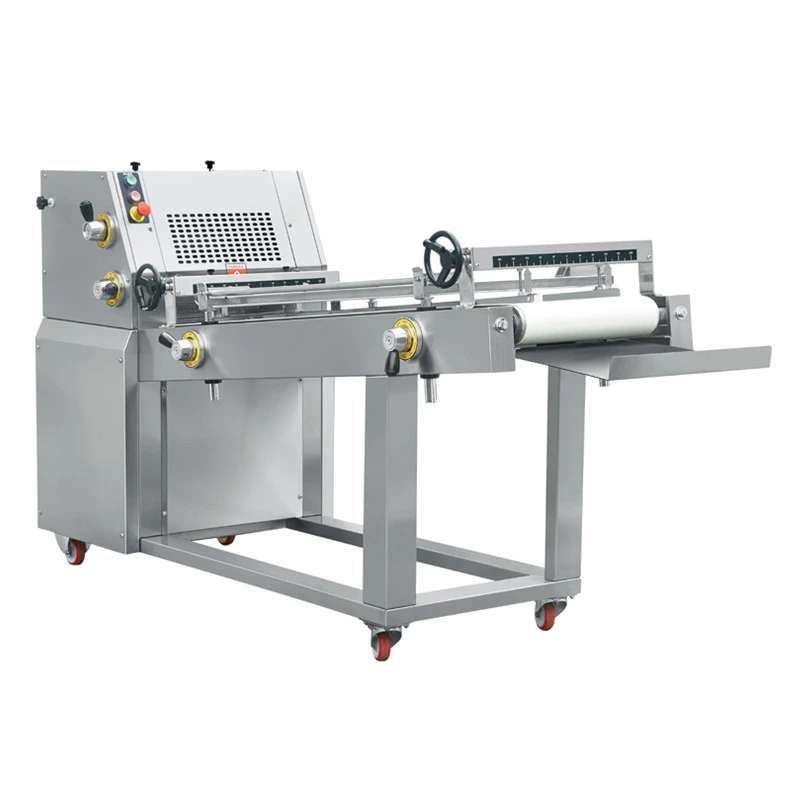
Bread and Toast Forming Line Now, if you wanna dive deeper into the technical stuff (no judgment, I know some of you like that), here’s the sources I rely on when I’m troubleshooting with clients:
- Electromagnetic Compatibility for Industrial Systems, IEC Standard 61000-6-4
- EMI Mitigation Techniques for Industrial Motor Drives, IEEE Transactions on Industrial Electronics, Vol. 62, No. 11, 2015
- Practical Guide to Grounding and Bonding for Industrial Machinery, National Electrical Manufacturers Association (NEMA) Publication ICS 10-2018
Guangdong Pinchain Machinery Co., Ltd.
As one of the most professional forming equipment manufacturers and suppliers in China, we have world-leading production equipment and strong manufacturing capabilities. Please feel free to wholesale advanced forming equipment made in China here from our factory.
Address: Room 302, Building 9, CIMC High tech Intelligent Manufacturing Center, No.3 Chanxing 1st Road, Xianyong Village, Chencun Town, Shunde District, Foshan City, Guangdong Province
E-mail: kowa@bakingmachinery.com
WebSite: https://www.bakingsmachinery.com/
