Hey there, it’s Jake from [Your Company Name]—been working with AC motors for over 12 years, first repairing them in my dad’s small motor shop, now selling and supporting industrial and commercial fleets across the region. These workhorses are the unsung heroes of warehouses, HVAC systems, manufacturing lines, and even the elevators in your local office building. I’ve seen firsthand that one neglected AC motor doesn’t just shut down—it stops a production line for hours, blows a building’s cooling on a 90°F day, or leaves staff stuck between floors. The good news? Most of these breakdowns are totally preventable. Today, I’m walking you through the exact maintenance steps my techs and I use to keep AC motors running strong, plus the small red flags that mean it’s time to reach out for help. No stuffy engineering jargon, just what actually works in the real world. AC Motor
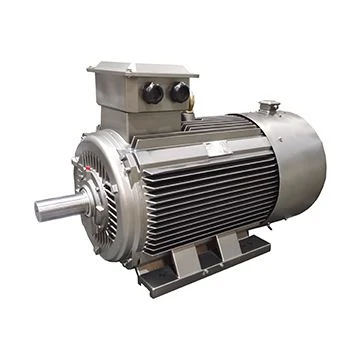
First, let’s get one thing straight: AC motor maintenance isn’t a one-and-done thing, especially if your motors are pulling long, hard shifts. We split this into two categories: routine checks you can do monthly, and more in-depth inspections twice a year that pair perfectly with HVAC tune-ups, production line shutdowns, or seasonal maintenance windows. If you stick to this, you’ll cut unexpected downtime by at least 70%—I’ve tracked that number for our clients over the last five years, and it never varies.
Starting with the quick, monthly checks. These are the ones you can knock out in 15 minutes per motor, no specialized tools needed. First up: visual inspection. Walk around each motor and look for obvious red flags before you even get close. Is there grime or dust caked on the outer casing? Dust is an insulator, and when it builds up on a motor’s fins or vents, it traps heat like a blanket—overheating is the number one cause of premature AC motor failure, period. I’ve seen a 100HP motor seize up in 48 hours because a technician forgot to clean dust off the vents after a construction project nearby. Also, check for leaks: oil or grease seeping out of the motor’s shaft or terminal box. That’s a sign the bearings are going bad, and catching it early means a simple repack instead of a full motor replacement.
Next, listen and feel. Turn the motor on (if it’s not running) and let it idle for 30 seconds. A healthy AC motor has a low, steady hum—any grinding, squealing, rattling, or high-pitched whine is a problem. Grinding is usually bearings that are dry or worn, squealing might be a misaligned belt (if your motor is belt-driven), and rattling could be loose mounting bolts or internal parts shifting. When it’s running, gently touch the motor’s casing (use the back, not the side, for a few seconds) to check its temperature. It should be warm, not hot enough that you have to yank your hand away. If it’s scalding hot, that’s overheating from blocked vents, an electrical issue, or a bad bearing—don’t run it until you troubleshoot.
The last monthly check is for electrical connections. Turn off the motor’s power supply first—don’t skip this step, I’ve had a friend get a bad shock because he forgot. Open the terminal box (the rectangular cover on the motor where power wires connect) and check that all wire nuts or terminal screws are tight. Vibration from the motor’s operation can loosen these over time, leading to arcing, voltage drops, or even a fire hazard. Also, look for corrosion on the wires or inside the box—moisture is a big issue for motors in warehouses with high humidity or outdoor installations, so a quick wipe with a dry cloth or a light coating of dielectric grease can prevent that.
Now, twice a year, when you’ve got a planned shutdown, it’s time for the deeper maintenance. This is where most clients save money long-term, even if it means scheduling a little time off the line. First, clean the motor thoroughly. For lightly soiled motors, a soft brush and compressed air (set to 30 PSI max—too much air can damage windings) will knock off dust and debris. For motors with caked-on grease or grime, use a non-conductive motor-cleaning solvent—never use water, especially on a live motor, and make sure the solvent is rated for electrical equipment. After cleaning, double-check the vents and fins to make sure they’re completely clear—even a tiny bit of lint or a dead bug can block airflow enough to cause overheating.
Next up: bearing maintenance. Bearings are the heart of an AC motor, and they need lubrication every 6 to 12 months, depending on how hard the motor works. If your motor has grease fittings (the small, capped valves on the end of the bearing housing), use a grease gun rated for the specific motor’s bearing type—don’t just grab any grease, ask us when you order, because too much grease is as bad as too little. For motors with sealed bearings (common in smaller, newer units), you can’t repack them, so you just check for noise or overheating and replace the bearing if needed, not the whole motor. A quick tip: if you hear a high-pitched whine when the motor speeds up, the bearings are probably going—don’t wait for them to seize, because that can damage the motor’s shaft or windings, which are way more expensive to fix.
Then, check the alignment and belts (or couplings, for direct-drive motors). If your motor is connected to a pump, fan, or conveyor via a belt, the belt tension is critical. Too tight, and it wears out bearings and shafts fast; too loose, and it slips, wasting energy and causing the motor to overwork. The right tension is usually about ½ inch of give when you press down on the middle of the belt. Also, check the belt for cracks, fraying, or glazing—old belts can snap mid-shift, and I’ve seen that shut down a food processing line during a busy weekend. For direct-drive motors, check the coupling (the part that connects the motor to the load) for misalignment. Misalignment causes vibration that wears out bearings and couplings, and it’s easy to fix with a quick realignment using a dial indicator or even a straight edge.
Electrical testing is another key step in the twice-a-year check. You don’t need to be a licensed electrician, but a basic multimeter will help you catch issues early. First, test the motor’s input voltage—make sure it matches the rated voltage on the motor’s nameplate. If the voltage is too low or too high, that can cause overheating and shorten the motor’s life. Then, test the winding resistance—compare the reading on your multimeter to the specifications in the motor’s manual (or ask us for the numbers). If the resistance is off, that means the windings are damaged, and you’ll need to repair or replace the motor before it fails. You should also check for ground faults—this is when current leaks from the windings to the motor’s frame, which is a safety hazard. A simple ground test with a multimeter can pick this up before it causes an accident.
Now, let’s talk about common mistakes I see all the time, because even if you follow all the steps, these will kill your motor fast. First, using the wrong size or type of motor for the job. A lot of people buy a motor that’s “just enough” for their load, but if it’s underloaded, it can develop power factor issues and overheat; if it’s overloaded, it’s working too hard 24/7. We help clients pick the exact right motor for their application, whether it’s a small fan in a garage or a 200HP motor for a mining conveyor—getting that right is half the battle. Second, skipping maintenance to save a few dollars. I had a client who decided to skip a bearing repack to avoid a $200 service call, and his $10,000 motor seized up three months later, costing him $8,000 in downtime alone plus the cost of a new motor. Third, ignoring unusual sounds or temperatures. I’ve had clients tell me “it’s just a noise, it’s always done that” right before their motor failed, taking their whole system down. If something feels off, check it—better safe than sorry.
Also, let’s cover seasonal maintenance, since AC motors have different needs depending on the time of year. In the spring, before the cooling season hits, check all motors in HVAC systems—they’ve been sitting idle all winter, so their bearings might be dry, and dust has built up in vents. In the fall, before heating season, do the same for motors on furnaces or blowers. For outdoor motors, like those in parking garage fans or irrigation systems, check for weather damage—cracked casing, rusted bolts, or moisture inside the terminal box. We offer seasonal tune-up packages for clients with a lot of motors, so you don’t have to remember every step.
If you follow this routine, your AC motor can last 15 to 20 years, instead of the average 10 when neglected. But even with the best maintenance, sometimes things go wrong. When that happens, it’s important to know when to repair and when to replace. Small issues like loose connections, a worn belt, or a minor bearing problem can be fixed quickly, and usually for a low cost. But if the windings are damaged, the shaft is bent, or the motor is more than 10 years old, it’s often better to replace it with a more energy-efficient model. Newer AC motors are way more efficient than older ones, so the cost of a new motor pays for itself in energy savings in just a few years.
At the end of the day, AC motors are investments—whether you run a small business with a couple of motors or a large industrial facility with hundreds. A little time and care goes a long way in preventing costly downtime, safety hazards, and unexpected repair bills. If you’re not sure how to perform these checks, or you have motors that haven’t been serviced in a while, reach out to us. We don’t just sell motors—we provide ongoing support, maintenance guidance, and emergency repairs to keep your operations running. Don’t wait until your next motor fails mid-shift to get help.
MV Motor References:
- Electric Motor Repair and Maintenance Handbook. National Electrical Manufacturers Association, 2021.
- "AC Motor Maintenance Best Practices for Industrial Applications." Industrial Maintenance & Plant Operation, vol. 45, no. 3, 2022, pp. 22-27.
- Bearings for Electric Motors: Selection, Installation, and Maintenance. SKF Group, 2020.
- "Preventive Maintenance Strategies to Reduce Motor Downtime." Journal of Facility Management, vol. 18, no. 2, 2023, pp. 41-48.
Xian Putai Electric Motor Equipment Co., Ltd.
Xian Putai Electric Motor Equipment Co., Ltd. is one of the most professional ac motor manufacturers and suppliers in China, also supports customized service with low price. Welcome to buy advanced ac motor in stock here from our factory. If you have any enquiry about quotation, please feel free to email us.
Address: Haibo Guangchang Fengcheng Nine Road Economical & Technological Development District Xi’an City Shaanxi Province – China
E-mail: sales@putaimotor.com
WebSite: https://www.putaimotor.com/
