As a supplier of 1680D Cationic Oxford Fabric, I am often asked about the fabric’s properties, especially its resistance to creasing. This question is crucial for many potential customers, as creasing can significantly affect the appearance and functionality of products made from the fabric. In this blog post, I will delve into the science behind 1680D Cationic Oxford Fabric and explore whether it is resistant to creasing. 1680D Cationic Oxford Fabric
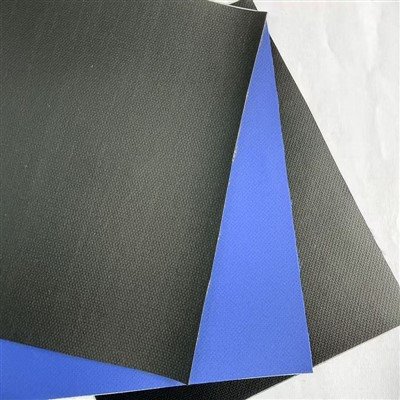
Understanding 1680D Cationic Oxford Fabric
Before discussing crease resistance, it’s important to understand the basic characteristics of 1680D Cationic Oxford Fabric. The "1680D" refers to the denier, which is a unit of measurement for the linear mass density of fibers. A higher denier means a thicker and stronger fiber. In the case of 1680D, the fabric is made from relatively thick yarns, which generally contribute to its durability and robustness.
Cationic dyeing is a special dyeing process used for this fabric. Cationic dyes have a positive charge, which allows them to bond strongly with the negatively charged fibers, resulting in vibrant, long – lasting colors. Oxford fabric, on the other hand, has a specific weave structure. It is typically a basket weave or a derivative of it, which gives the fabric a smooth and uniform appearance.
Factors Affecting Crease Resistance
Several factors determine the crease resistance of a fabric, and 1680D Cationic Oxford Fabric is no exception.
Fiber Properties
The type of fibers used in the fabric plays a significant role. Most 1680D Cationic Oxford Fabrics are made from polyester fibers. Polyester is known for its relatively good shape – memory properties. When a crease is formed in a polyester – based fabric, the fibers tend to try to return to their original state due to their molecular structure. The long – chain polymer molecules in polyester are arranged in an ordered manner, and when deformed, they have an inherent tendency to realign. This means that polyester fabrics, including 1680D Cationic Oxford, can often recover from minor creasing over time.
Weave Structure
The weave structure of Oxford fabric also impacts crease resistance. The basket – like weave of Oxford fabric distributes stress evenly across the fabric surface. When a force is applied that could cause creasing, the interlacing yarns in the basket weave help to spread the force rather than concentrating it in one area. This prevents the formation of sharp, deep creases and makes it easier for the fabric to bounce back to its original shape.
Finish Treatment
Many suppliers, including myself, apply finish treatments to enhance the properties of 1680D Cationic Oxford Fabric. One such treatment that can improve crease resistance is a resin finish. The resin forms a thin film on the surface of the fibers, which can hold the fibers in place and provide additional stiffness. This stiffness helps the fabric to resist the formation of creases when subjected to normal handling and use.
Testing the Crease Resistance of 1680D Cationic Oxford Fabric
To determine the actual crease resistance of 1680D Cationic Oxford Fabric, we conduct a series of tests in our laboratory.
Crush Test
In the crush test, we take a sample of the fabric and tightly crumple it in our hands for a certain period, say 5 minutes. After that, we release the fabric and let it rest for another 5 minutes. Then, we visually inspect the fabric to see how well it has recovered from the crumpling. In most cases, we find that 1680D Cationic Oxford Fabric shows a high degree of recovery. Minor wrinkles may remain, but they are often not as pronounced as those in some other fabrics.
Fold Test
The fold test involves folding the fabric sample along a straight line and applying a pressure of a specific weight for a set time, usually 24 hours. After removing the weight and unfolding the fabric, we measure the angle of the remaining crease. A smaller angle indicates better crease recovery. Our tests show that 1680D Cationic Oxford Fabric typically has a relatively small residual crease angle, indicating good resistance to permanent creasing.
Real – World Applications and Crease Resistance
The crease resistance of 1680D Cationic Oxford Fabric makes it suitable for a wide range of applications.
Luggage and Bags
For luggage and bags, creasing can make the product look old and worn out quickly. Since 1680D Cationic Oxford Fabric can resist creasing, it maintains its sleek and new – looking appearance even after being stuffed and carried around. This is especially important for high – end luggage brands that want their products to look presentable for a long time.
Outdoor Equipment
In outdoor equipment such as tents and backpacks, the fabric is often subject to rough handling and folding during transportation and setup. The crease resistance of 1680D Cationic Oxford Fabric ensures that the equipment can be easily packed and unpacked without developing unsightly and permanent creases. This not only improves the aesthetic appeal but also helps to maintain the structural integrity of the equipment.
Limitations and Considerations
While 1680D Cationic Oxford Fabric has good crease resistance, it is not completely crease – proof.
Extreme Conditions
Under extreme conditions, such as being tightly packed in a small space for an extended period or being subjected to very high – pressure folding, the fabric may develop more stubborn creases. In these cases, the fabric may require some additional treatment, such as gentle steaming or ironing on a low – heat setting, to fully recover its original appearance.
Surface Texture and Color
The surface texture and color of the fabric can also affect the perception of creasing. For example, darker colors may make creases more noticeable, while a smooth surface may show creases more clearly than a textured one. However, this is more of a visual perception issue rather than a reflection of the actual crease resistance properties of the fabric.
Conclusion

In conclusion, 1680D Cationic Oxford Fabric exhibits a good level of resistance to creasing. Thanks to the properties of polyester fibers, the unique weave structure, and optional finish treatments, the fabric can recover well from minor creasing and maintain a presentable appearance in most real – world applications.
600D Oxford Fabric If you are in the market for high – quality, crease – resistant fabric for your products, 1680D Cationic Oxford Fabric could be an excellent choice. I invite you to contact me to discuss your specific requirements and explore how our fabric can meet your needs. Whether you are a luggage manufacturer, an outdoor equipment producer, or have other applications in mind, I am confident that our 1680D Cationic Oxford Fabric will exceed your expectations.
References
- Textile Science and Technology: Volume 1 – Fibre Structure, by W. S. Atkins
- Handbook of Textile Fibre Structure: Volume 1, edited by S. Hearle
Dongyang Huangxiu Leather & Plastic Co., Ltd.
With abundant experience, we are one of the most professional 1680d cationic oxford fabric manufacturers in China. We warmly welcome you to wholesale customized 1680d cationic oxford fabric made in China here from our factory. If you have any enquiry about quotation and free sample, please feel free to email us.
Address: Huangxiu Leather & Plastic Products, No. 79 Shunda Road, Huashui Town, Dongyang City, Zhejiang Province
E-mail: x372921764@163.com
WebSite: https://www.huangxiutextile.com/
